News & Events · 17 Nov 202640 reads
Vegan food from the air
Now showing · Trailer
No farmland, no farm, no animals: just sunlight, water and air to make vegan protein. Watch Anchay TV’s trailer in Vietnamese, English, Chinese and Japanese, and the full talk by Lê Ngọc Ánh Minh, Chairman of the Vietnam ASEAN Hydrogen Club, at Green Business Matching Day Vietnam.
Ăn Chay TV NewsNewsroom
Was this useful?
Thanks for your vote.
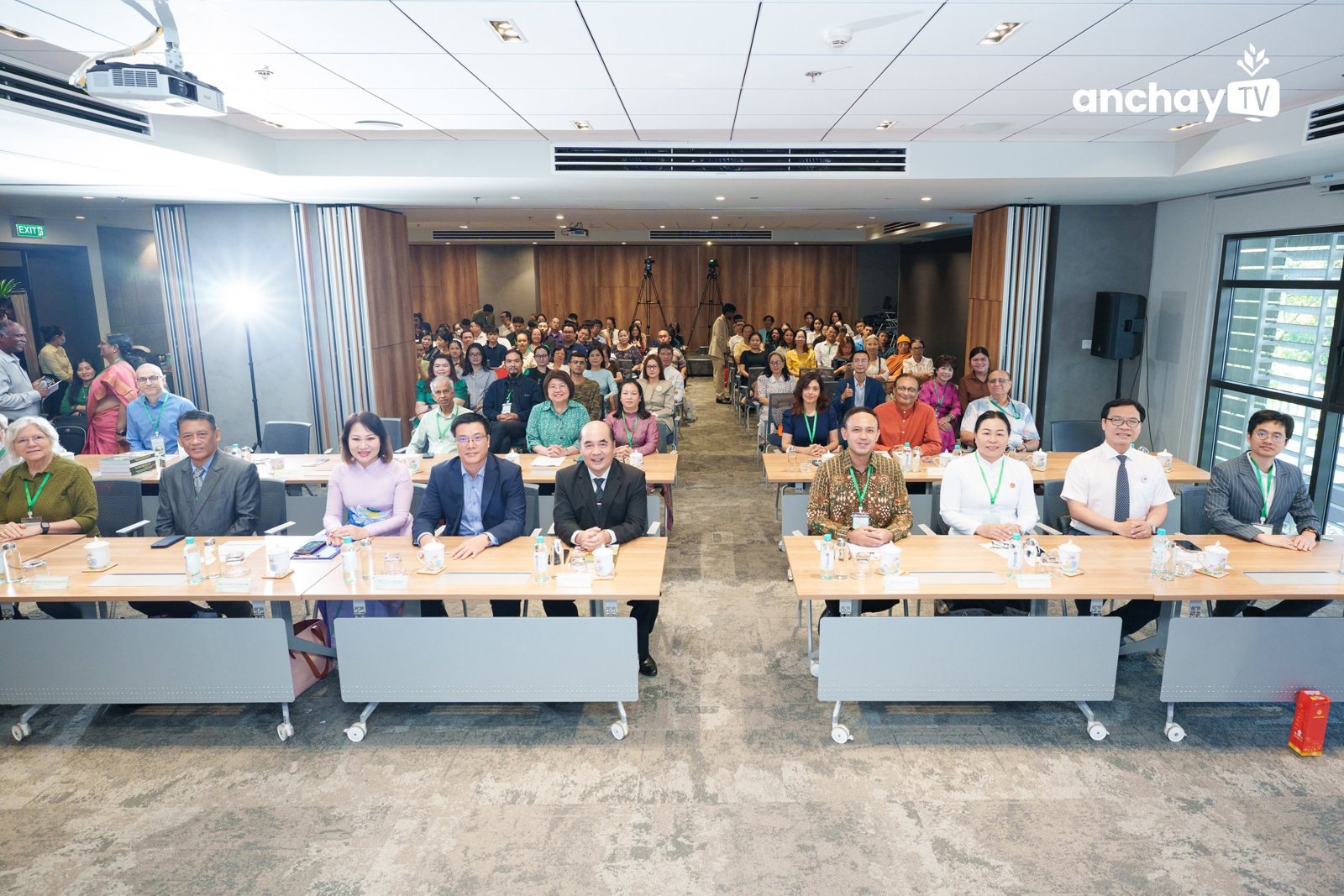
Anchay TV News – Ho Chi Minh City, 17 November 2026. “What if, one day, your meal didn’t come from a field at all?” That is the question that opens Vegan Food from the Air, a trailer by Anchay TV that retells the story Mr. Lê Ngọc Ánh Minh, Chairman of the Vietnam ASEAN Hydrogen Club (VAHC) and Executive Chairman of Pacific Group, brought to Green Business Matching Day Vietnam on 4 November 2026 at Lumi Hub, Republic Plaza, Ho Chi Minh City. The trailer at the top of this article comes in four versions: Vietnamese, English, Chinese (Mandarin) and Japanese.
Watch the full talk in five languages
Mr. Lê Ngọc Ánh Minh’s full talk at Green Business Matching Day Vietnam comes in five versions: Mandarin Chinese, Cantonese, the Vietnamese original, English and Japanese; all but the Vietnamese original are dubbed. All five carry English subtitles.
From sunlight, water and air to a protein-rich powder
The trailer explains the process in under a minute. Solar power splits water into green hydrogen. The hydrogen meets CO₂ captured from the air, or from factory emissions, and a special kind of bacteria ferments the mixture into protein. The result is a golden powder, rich in protein, edible and completely vegan.
“This is not science fiction,” the trailer reminds us. In the 16th century the potato, from the Andes, was a strange new food to most of the world; in 2024 the first factory making protein from the air began operating. Every new food once sounded impossible.
The question Mr. Minh put to the vegan food industry
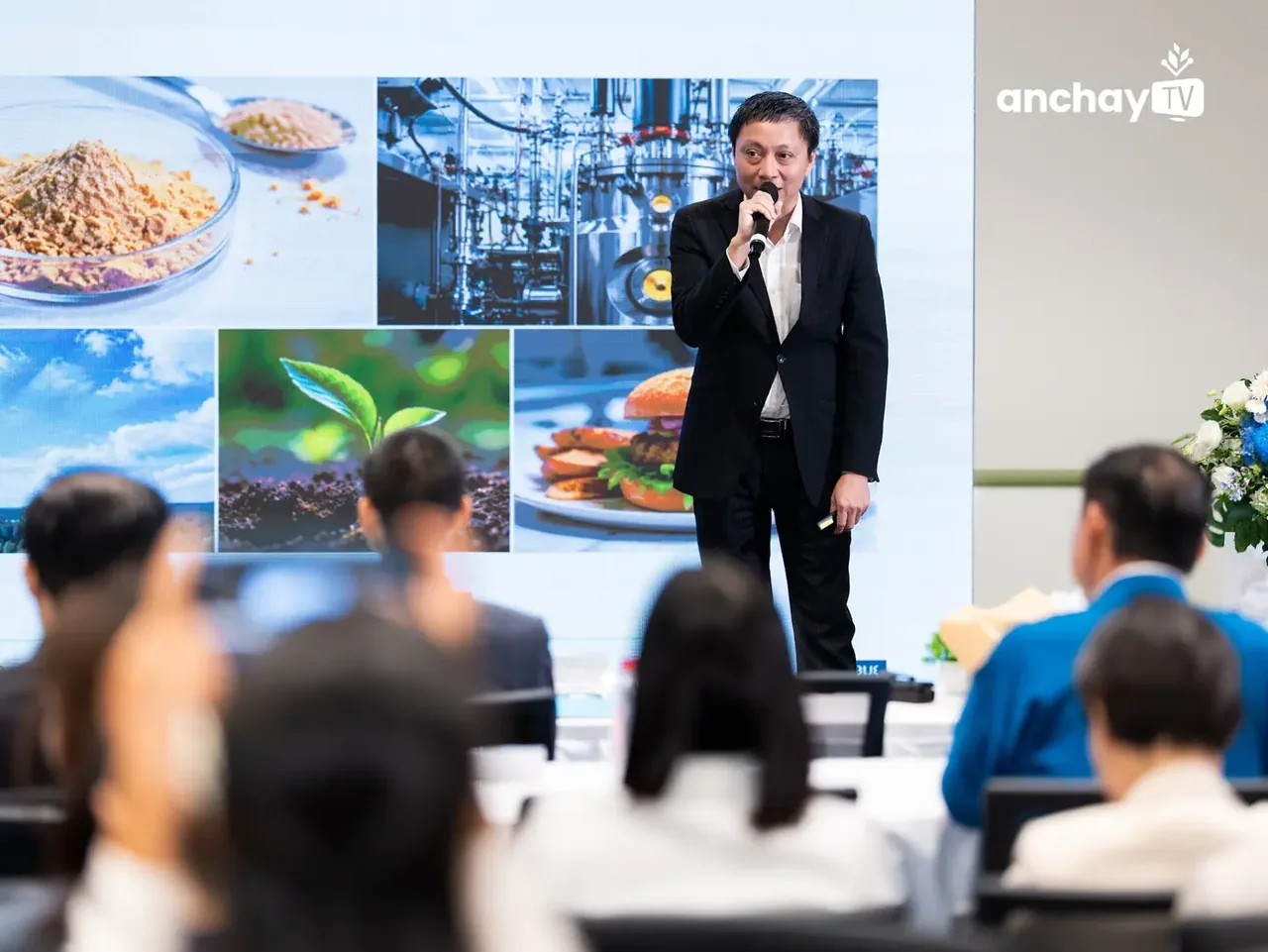
Opening his talk, Hydrogen and Clean Energy in Vegan Food Production, Mr. Minh pointed to a paradox: plant-based products are growing very fast, yet farming and processing still rely mainly on fossil fuels, and clean energy accounts for only a very small share. According to the figures he presented, up to 57% of the energy used in food production as a whole goes into generating steam.
How can we make vegan food cleaner, from farm to table?
— Lê Ngọc Ánh Minh
Protein from the air: Finland and Denmark are already doing it
According to Mr. Minh, only two places in the world have so far commercialised this technology. In Finland, Solar Foods aims to make food from nothing but CO₂, hydrogen and solar energy. Its first factory has a capacity of 160 tonnes of protein a year, and a second factory is being prepared. The product is already sold in Singapore through a partner, and in Japan the company works with Ajinomoto on cakes and ice cream.
In Denmark, React Foods follows a two-stage process: CO₂ and renewable hydrogen are turned into acetate, and the acetate is then combined with yeast to produce protein-rich biomass.
What Mr. Minh wanted to stress is what this means: deserts where nothing can be grown, but which are full of sun and wind, could become places that produce food. He said the approach has also been taken up in NASA’s programme for missions to the Moon and Mars. VAHC, he said, is working with Vietnamese partners, among them Dr. Ngô Võ Kế Thành and science and technology universities, on plans for trials and a demonstration project in Vietnam.
There are no animals at all, and no land is needed. Just sunlight and air, and you can produce it.
— Lê Ngọc Ánh Minh
Hydrogen in the factory and in the kitchen
The second direction is heat. Food production, vegan food included, needs a great deal of heat, and today that heat comes mostly from coal or natural gas. An industrial frying line test he cited showed a 97% cut in CO₂ emissions when the fuel was fully replaced by hydrogen. But he was clear that this is still theory: the energy transition has to go step by step, the way a community takes years to grow. In Bà Rịa – Vũng Tàu, Long Thành and Đồng Nai, where factories mostly run on gas, partners are testing a blend of about 0.5–1% hydrogen in the existing gas pipelines, and he said the reduction in emissions is clearly measurable.
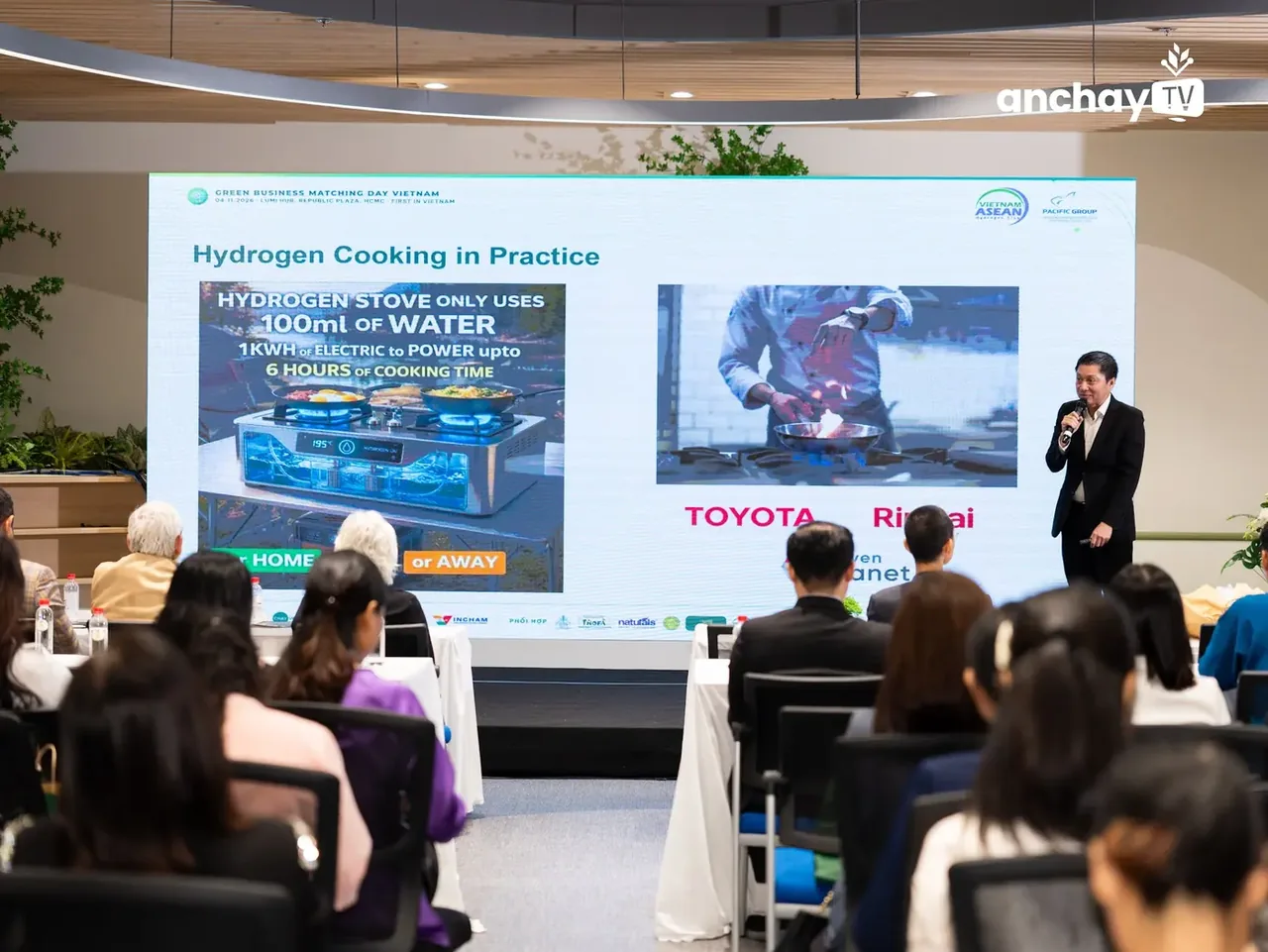
Hydrogen has reached the kitchen too. He showed the hydrogen grill developed jointly by Rinnai and Toyota in Japan, still very expensive and aimed at five-star restaurants and hotels, as well as hydrogen stoves from India. Unlike grilling over charcoal or gas, which dries food out, burning hydrogen releases water vapour, so grilled food stays moist and tastes better.
Vietnam’s advantage
Mr. Minh argued that Vietnam already has the raw materials to make its own hydrogen: agricultural by-products such as rice straw, above all in the Mekong Delta, the country’s rice bowl and farming hub. He cited a recent India–Japan agreement to produce gas from agricultural waste, and said his team has already trialled the process.
To close, he summed up three directions: using hydrogen in food production to cut emissions; new technology that makes food directly from air and sunlight without land, still costly for now, for which VAHC is putting together a team to run a demonstration project in Vietnam; and using hydrogen for cooking.
From our perspective today, hydrogen is an input we can use, not just for energy, but as a raw material to produce food. And this is completely vegan.
— Lê Ngọc Ánh Minh
At the same event, VAHC and Anchay TV signed a memorandum of understanding on media and sustainability cooperation (read about the signings). More on the morning’s other speakers: from the Indian market to clean energy for green food.
Report: Anchay TV News · Trailer: Anchay TV, producer and script Thao Le · Photos: Anchay TV