News & Events · 15 Nov 2026
International Vegetarian Conference 2026: more than 150 experts, researchers and guests on vegetarian food in Asia
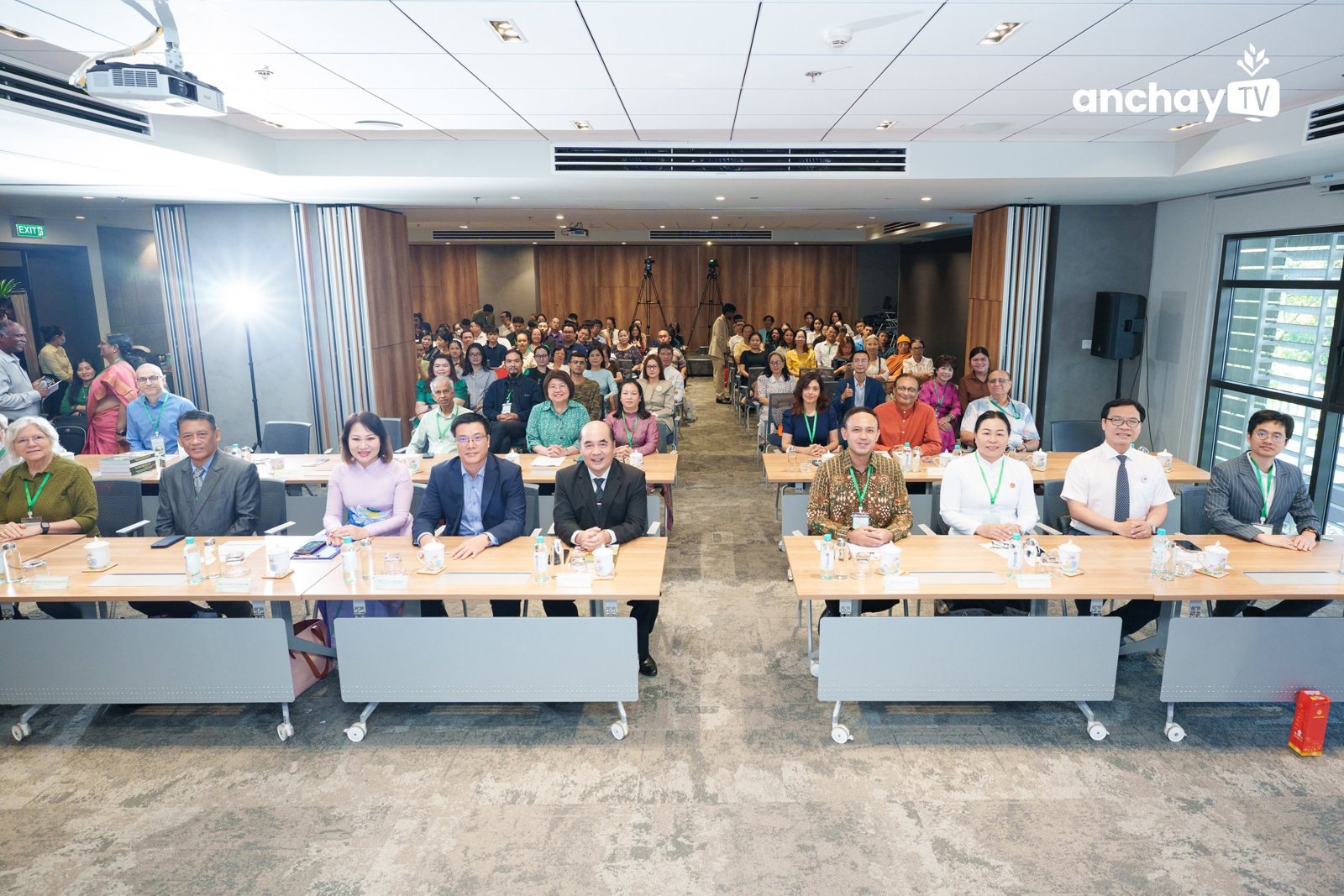
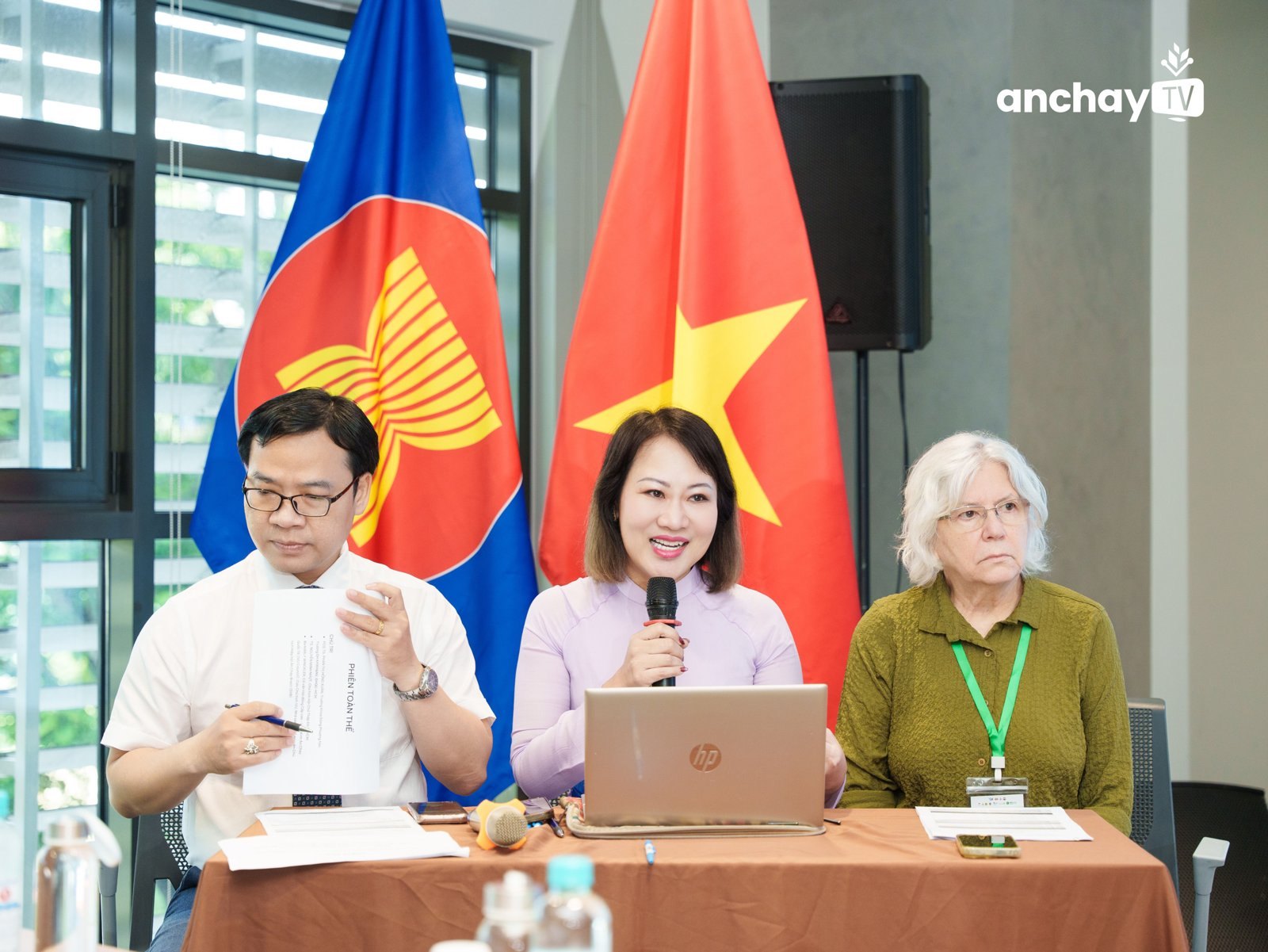
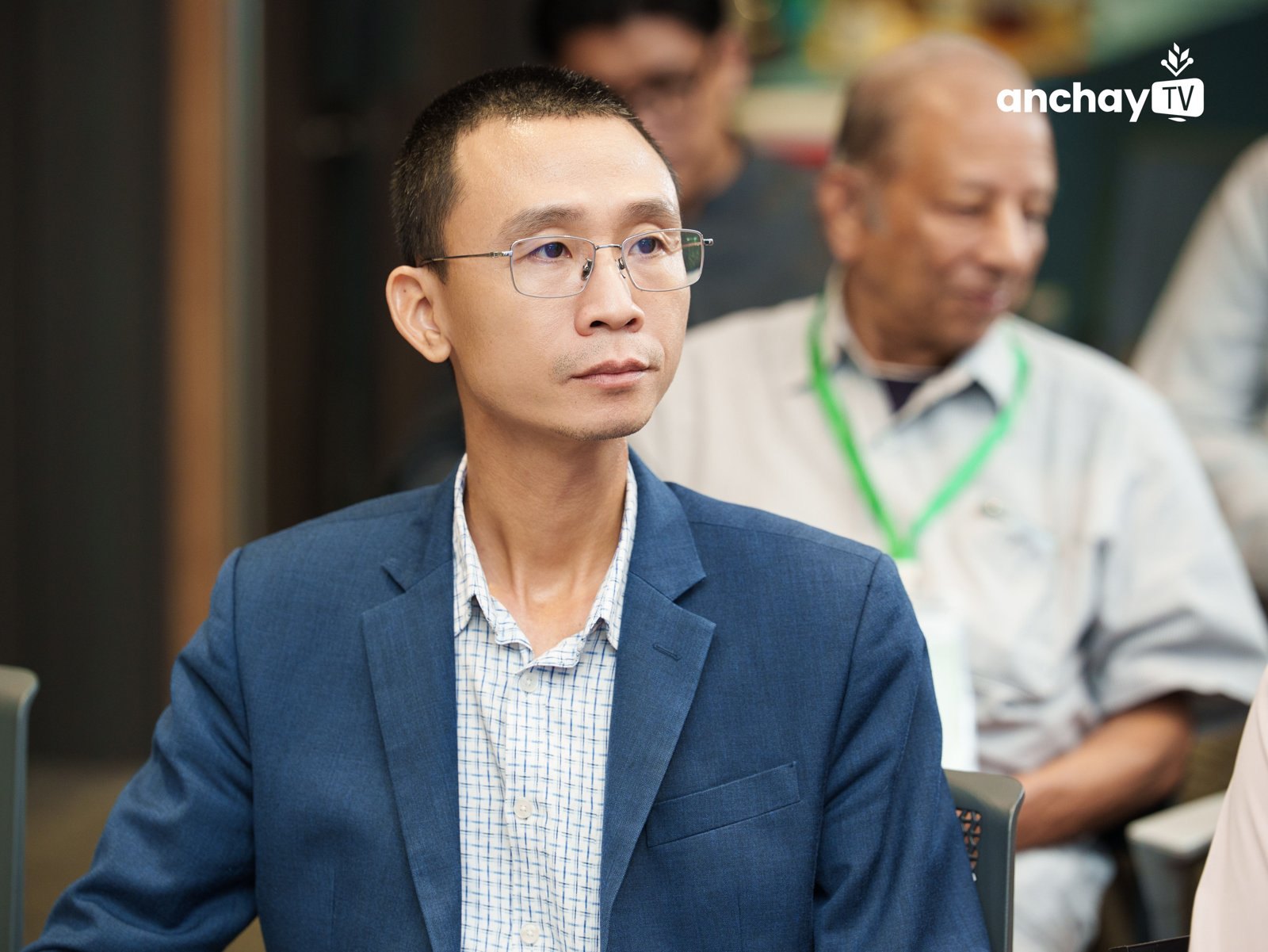
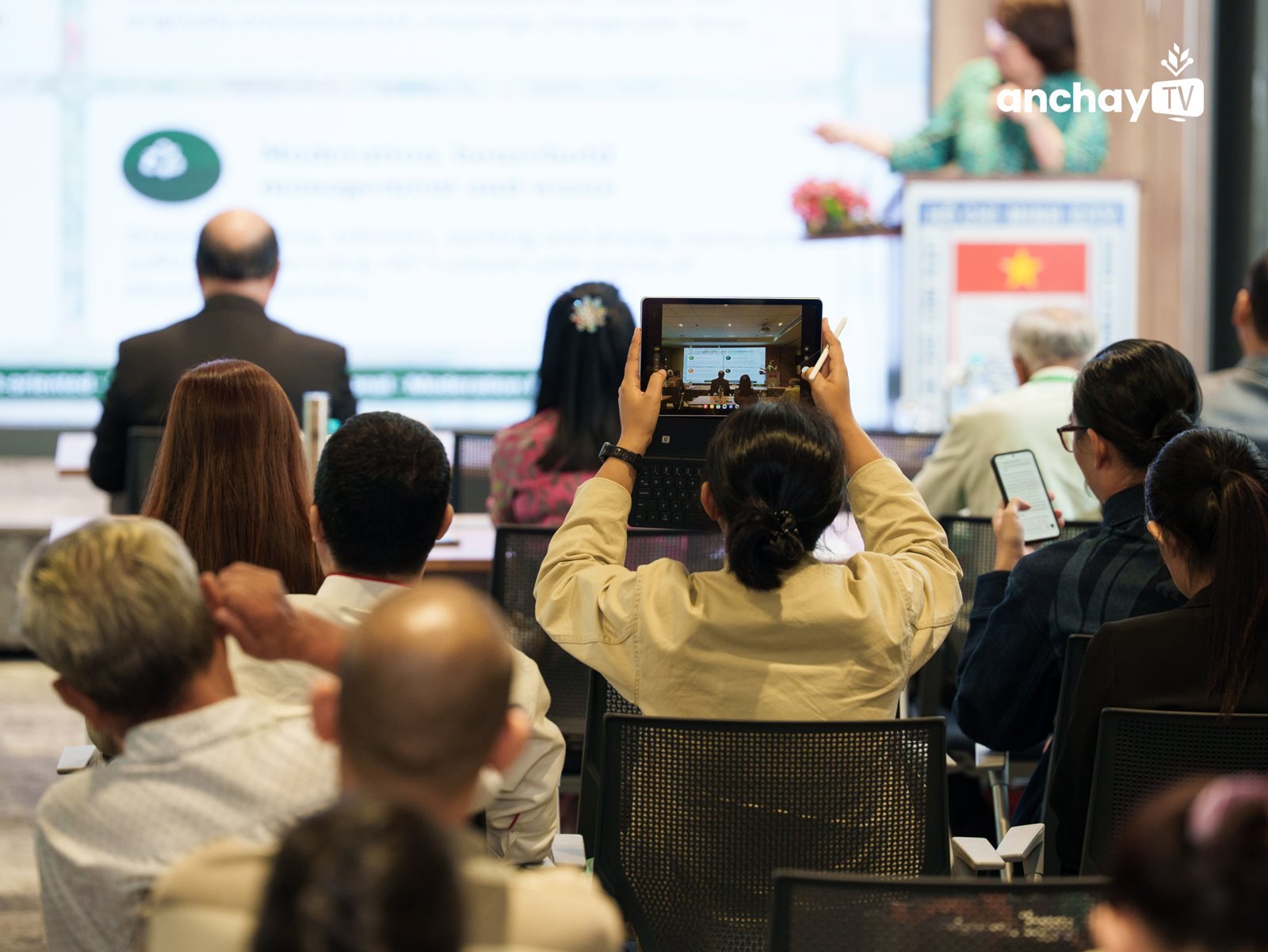
More than 150 experts, researchers and guests — scientists, dietitians, diplomats, international organisations and green businesses — gathered at the Friendship Building, 31 Lê Duẩn, Ho Chi Minh City on the morning of 5 November 2026 for the main working day of the International Vegetarian Conference 2026 (IVC 2026), held to mark World Vegan Month.
Ăn Chay TV NewsNewsroom
Anchay TV News – Ho Chi Minh City, 5 November 2026. IVC 2026 was the second international vegetarian conference held in Vietnam, running over two days, 5–6 November 2026, under the theme “Green cuisine and green education for sustainable development”. Its academic strand was titled “Vegetarian food culture and sustainable development in Asia: from interdisciplinary theory to practice”. Four organisations hosted it jointly: the University of Social Sciences and Humanities, VNU-HCM (HCMUSSH), the Ho Chi Minh City Union of Friendship Organizations (HUFO), the Vietnam – Southeast Asia Friendship Association in Ho Chi Minh City (VAFA) and the International Vegetarian Union (IVU). Anchay TV was the official media partner.
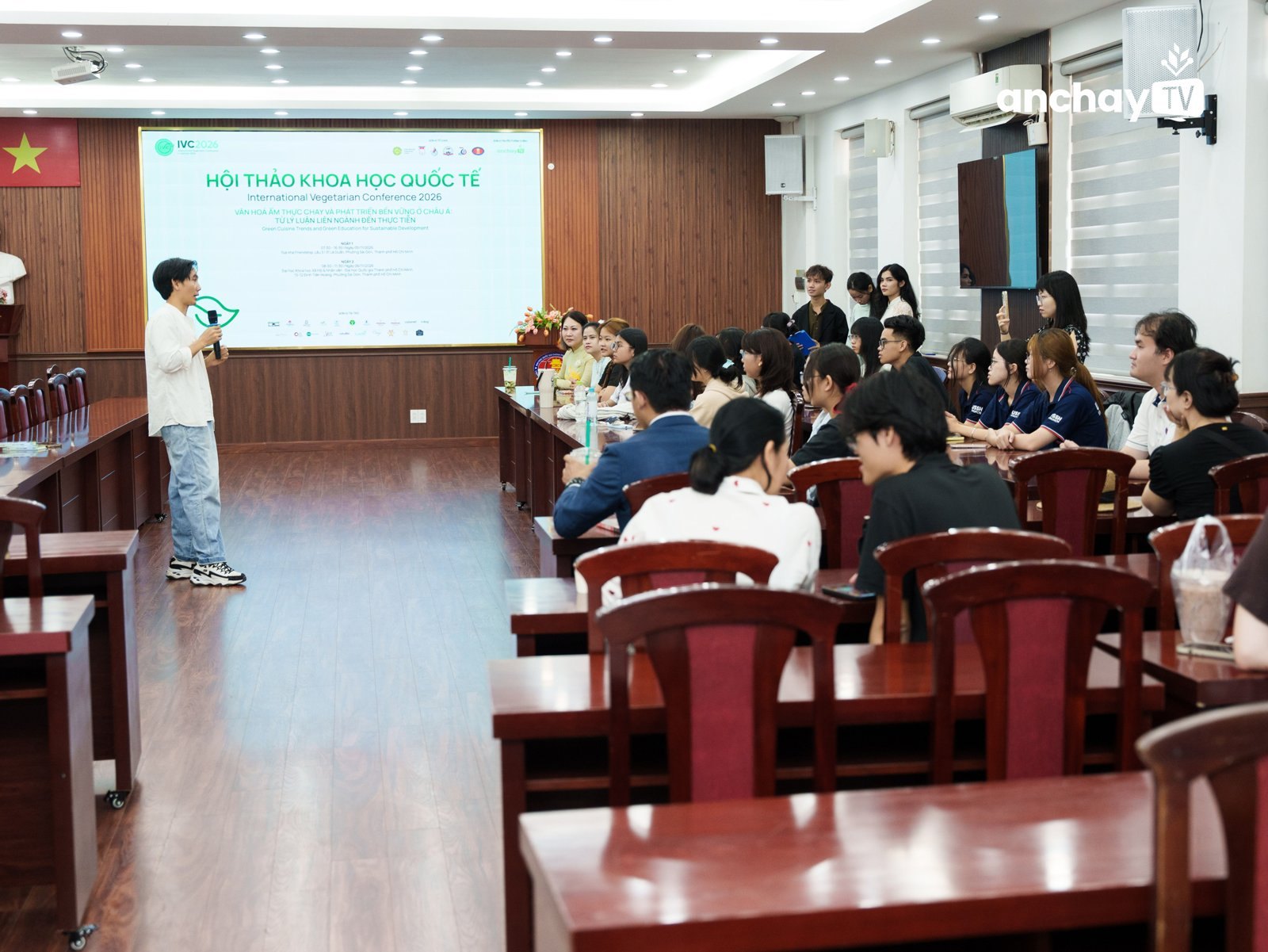
The first day, in the third-floor hall of the Friendship Building, held the opening session, one plenary session, two panel sessions and a discussion. The second day, 6 November, moved to Hall D at HCMUSSH for an exchange programme, an exhibition and business networking.
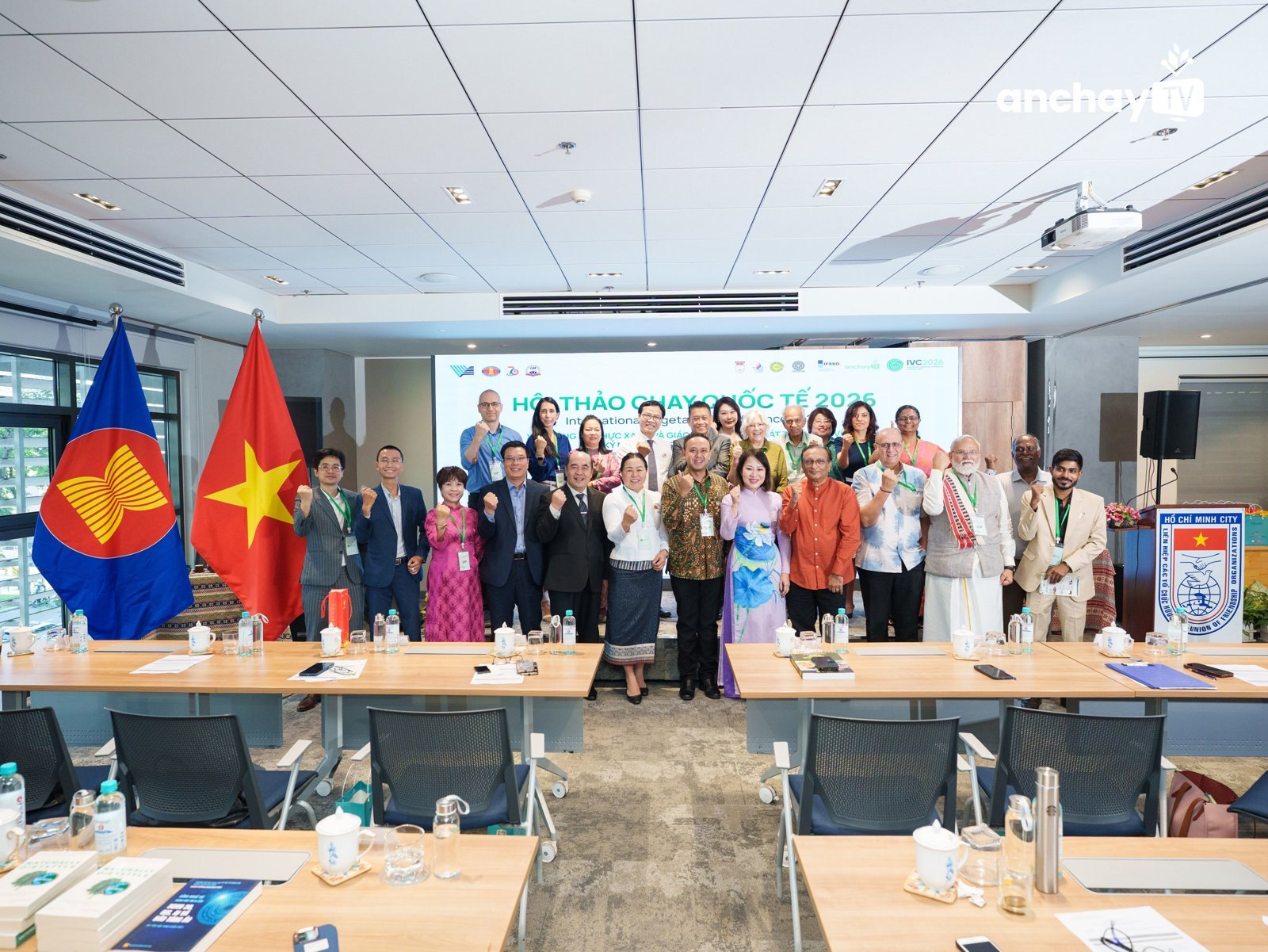
Opening: vegetarian food as a bridge between peoples
Opening the conference, Mr Hồ Xuân Lâm, Standing Vice President of HUFO, looked at it through the lens of people-to-people relations and cultural diplomacy. Culture, he said, is one of the most accessible and lasting bridges between nations, while food opens a way to talk across differences of language, religion and custom. Asian vegetarian cuisine, bound up with tradition, belief and a philosophy of living in harmony with nature, can therefore connect communities.
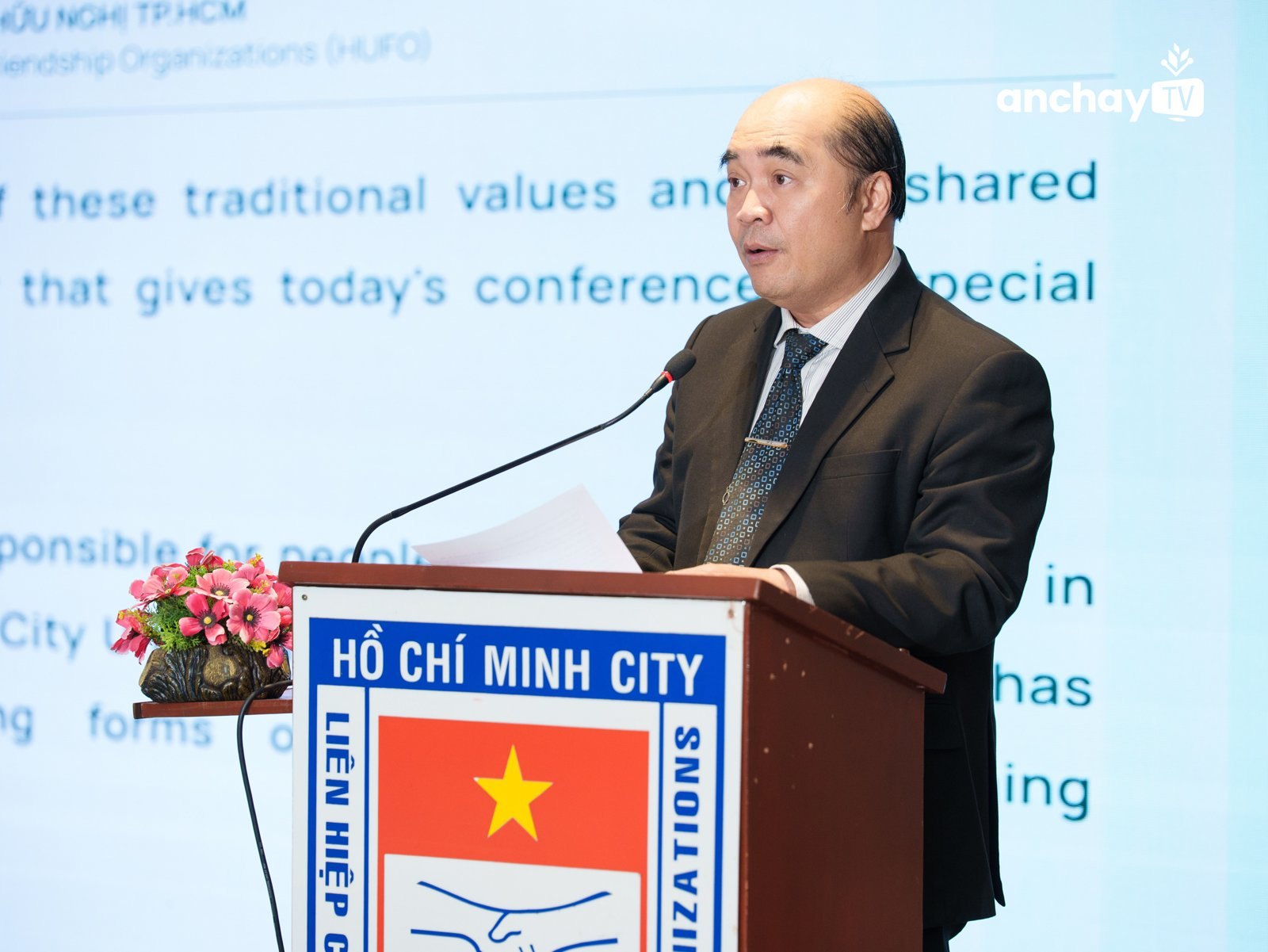
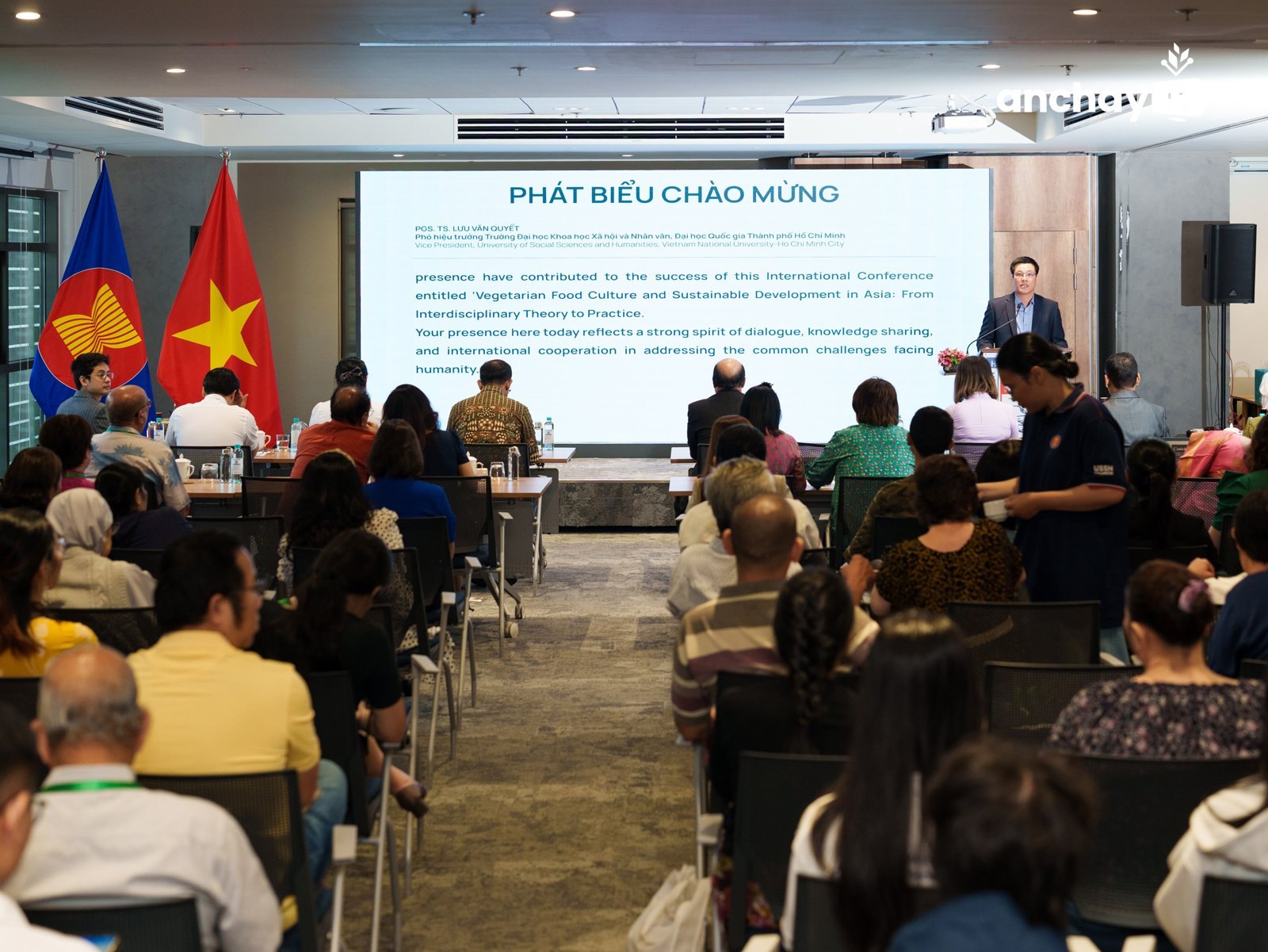
Assoc. Prof. Dr Lưu Văn Quyết, Vice Rector of HCMUSSH, gave the welcome address. Against a background of climate change, food security and pressure on public health, he argued, sustainable development is not only a matter of technology or economic policy but is tied to cultural values and everyday choices. Vegetarian food in Asia, he said, is moving from religious practice towards green consumption, health care and environmental responsibility.
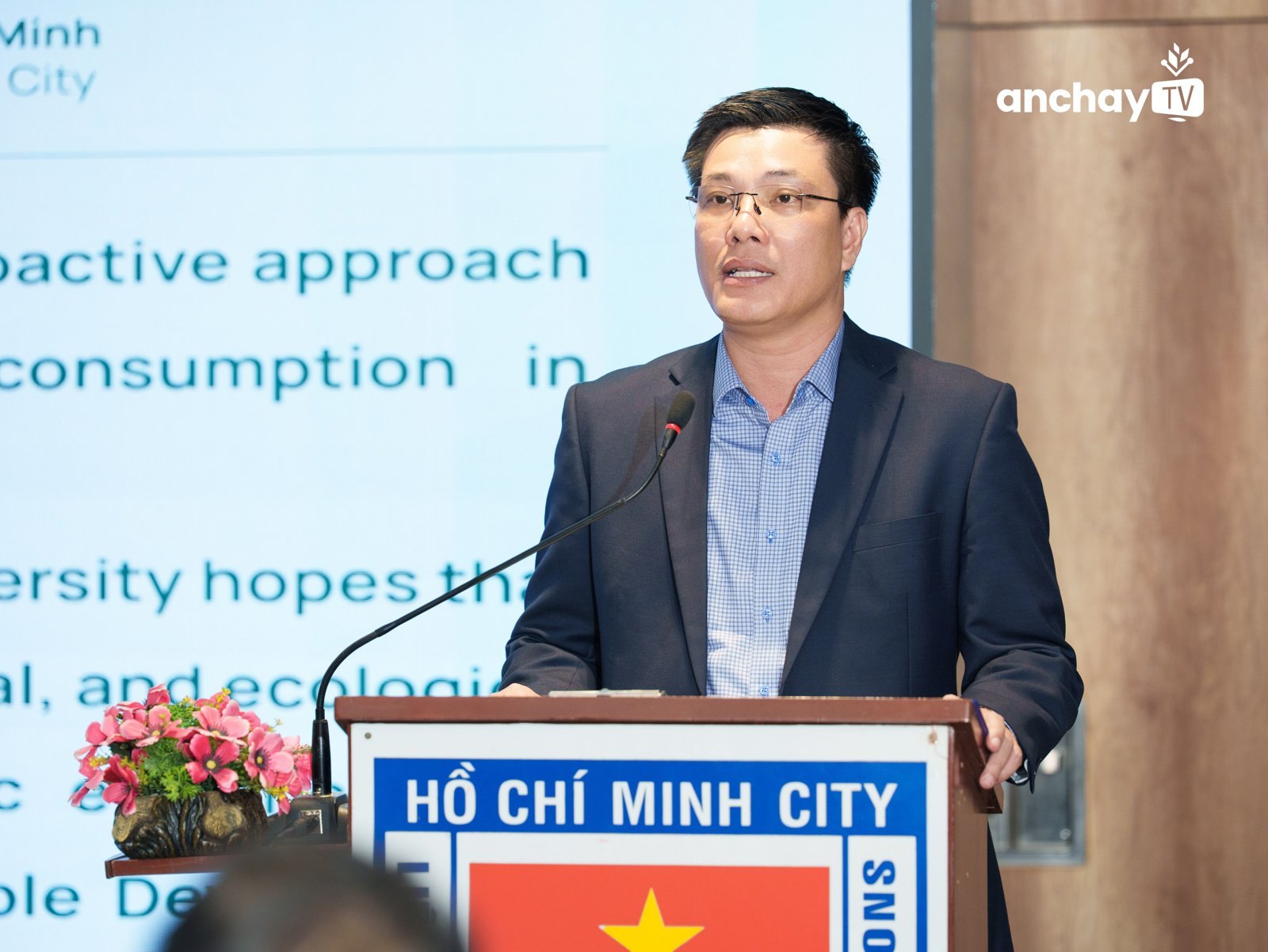
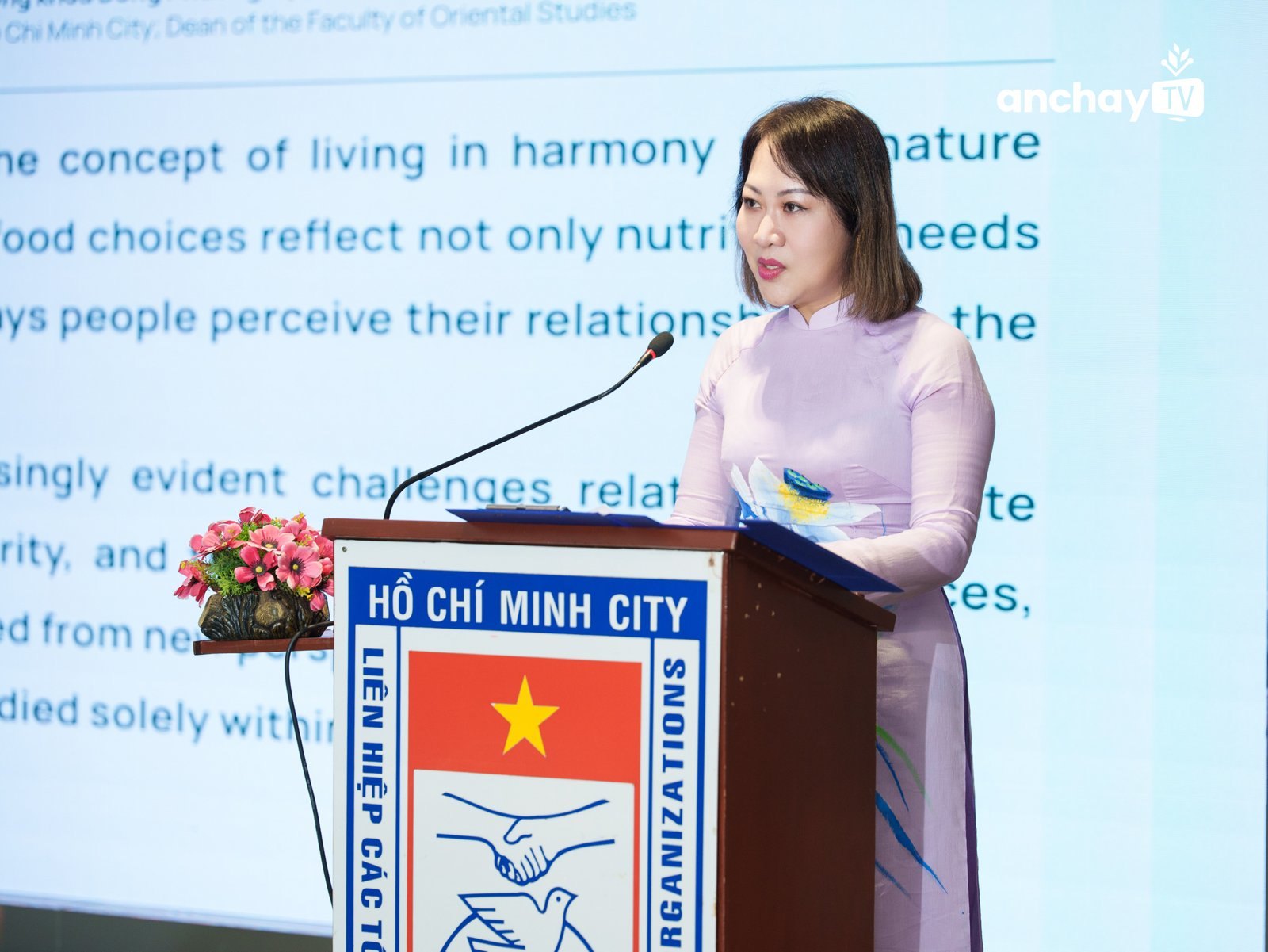
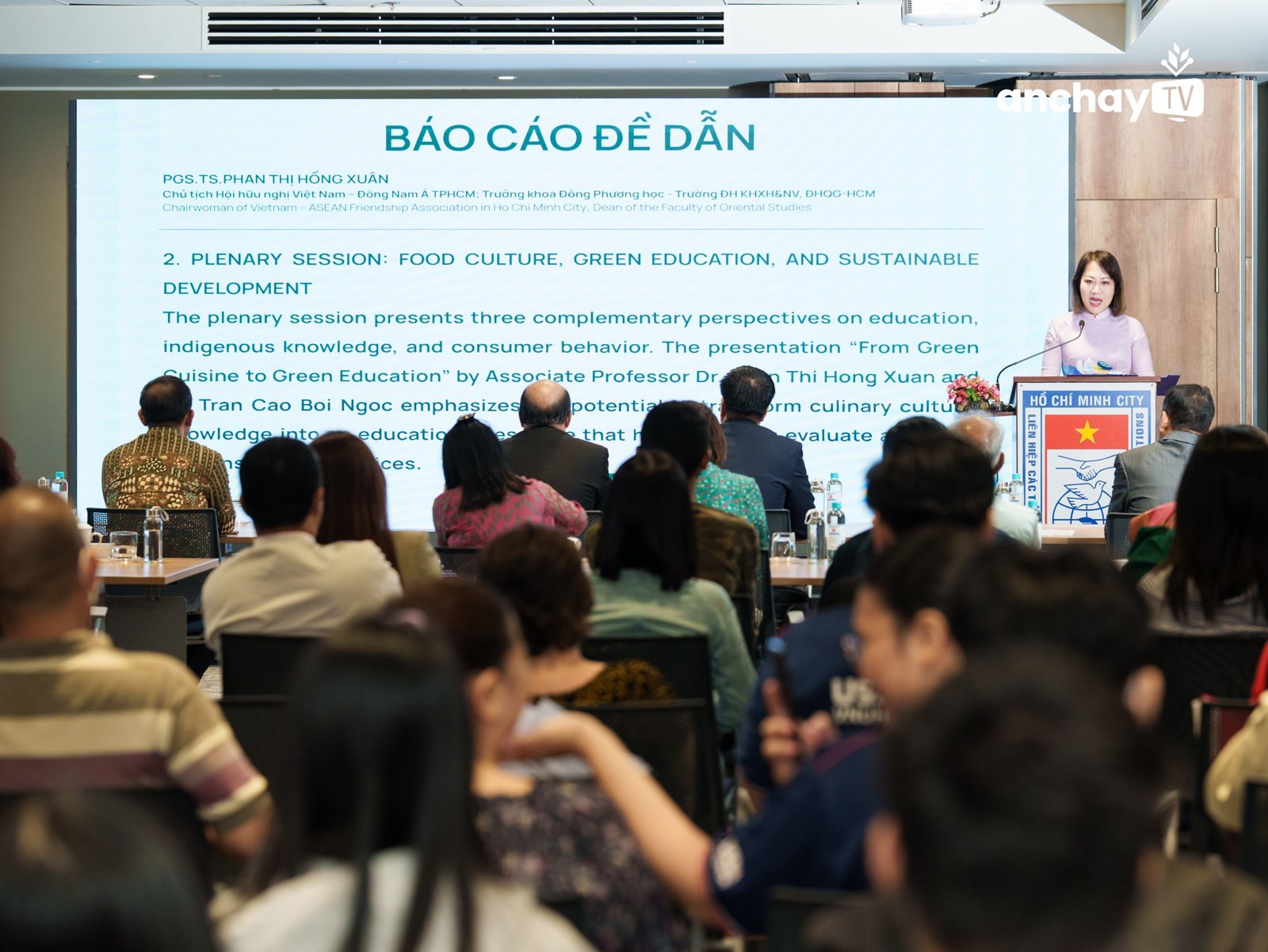
Keynote: a vegetarian diet is not automatically a sustainable one. Assoc. Prof. Dr Phan Thị Hồng Xuân, President of VAFA and Dean of the Faculty of Oriental Studies at HCMUSSH, gave the keynote on the links between environment, health, culture and social responsibility. Its sharpest point was a caution: eating vegetarian does not in itself mean a healthy diet or sustainable consumption. The benefits depend on dietary variety, where the food comes from, how heavily it is processed, how it is produced, and how little is wasted.
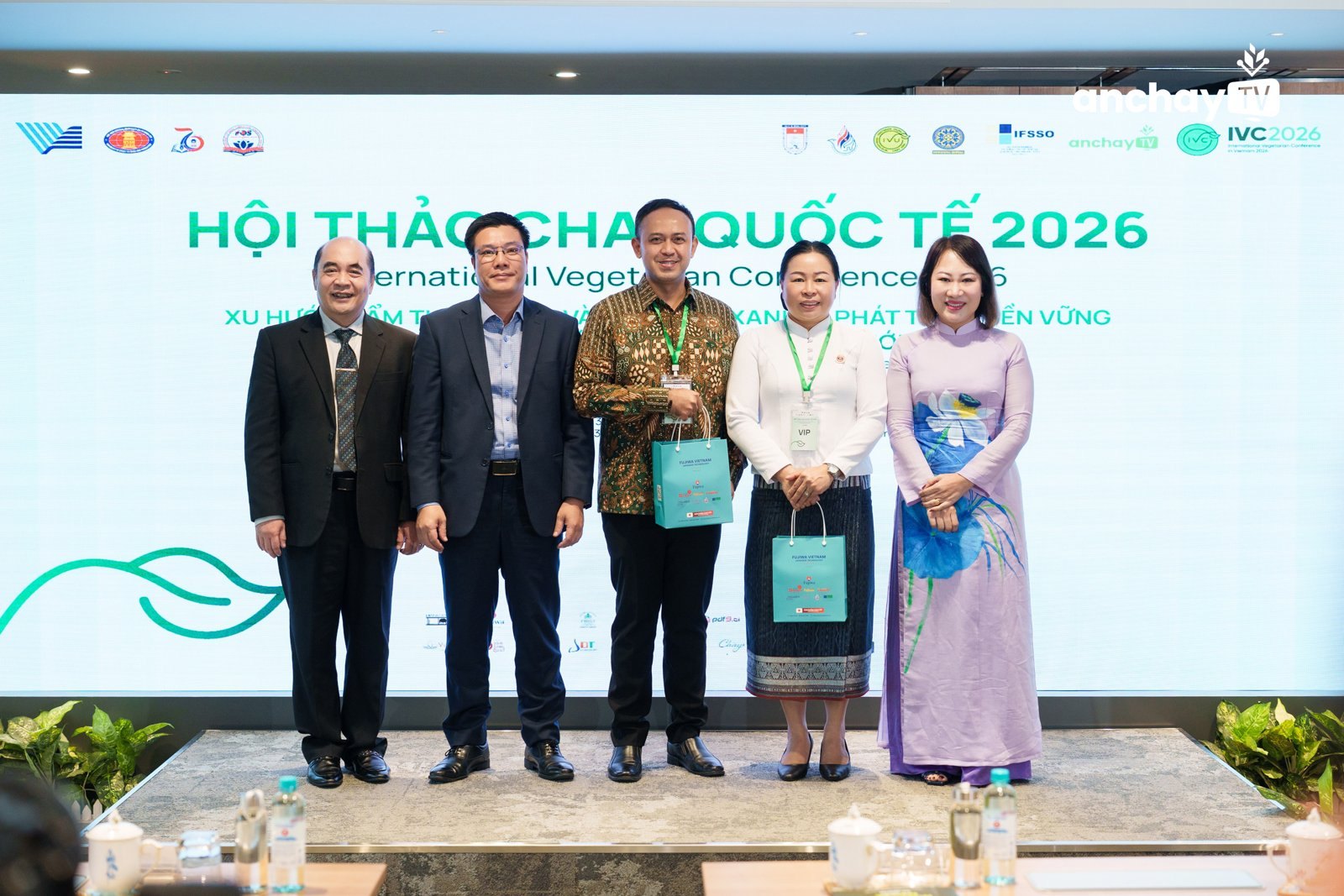
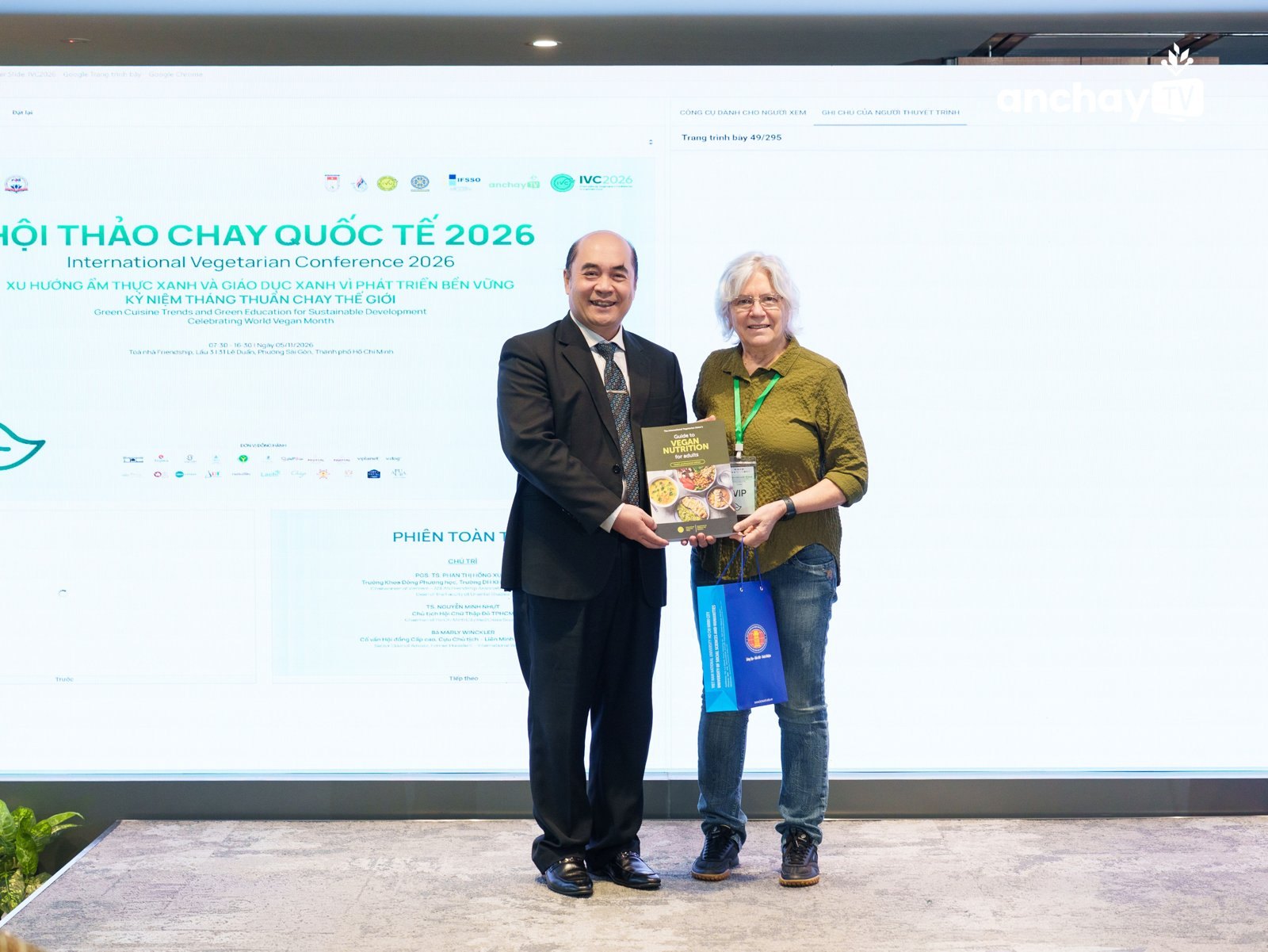
After the keynote, the organisers presented mementoes to representatives of the universities and international organisations taking part. Ms Marly Winckler presented HUFO’s leadership with the IVU’s Guide to Vegan Nutrition for Adults.
Plenary: green education, indigenous knowledge and conscious eating
The plenary was chaired by Assoc. Prof. Dr Phan Thị Hồng Xuân, Dr Nguyễn Minh Nhựt (President of the Ho Chi Minh City Red Cross) and Ms Marly Winckler (Adviser to the IVU Senior Council, former IVU President and founder of the Brazilian Vegetarian Society, SVB).
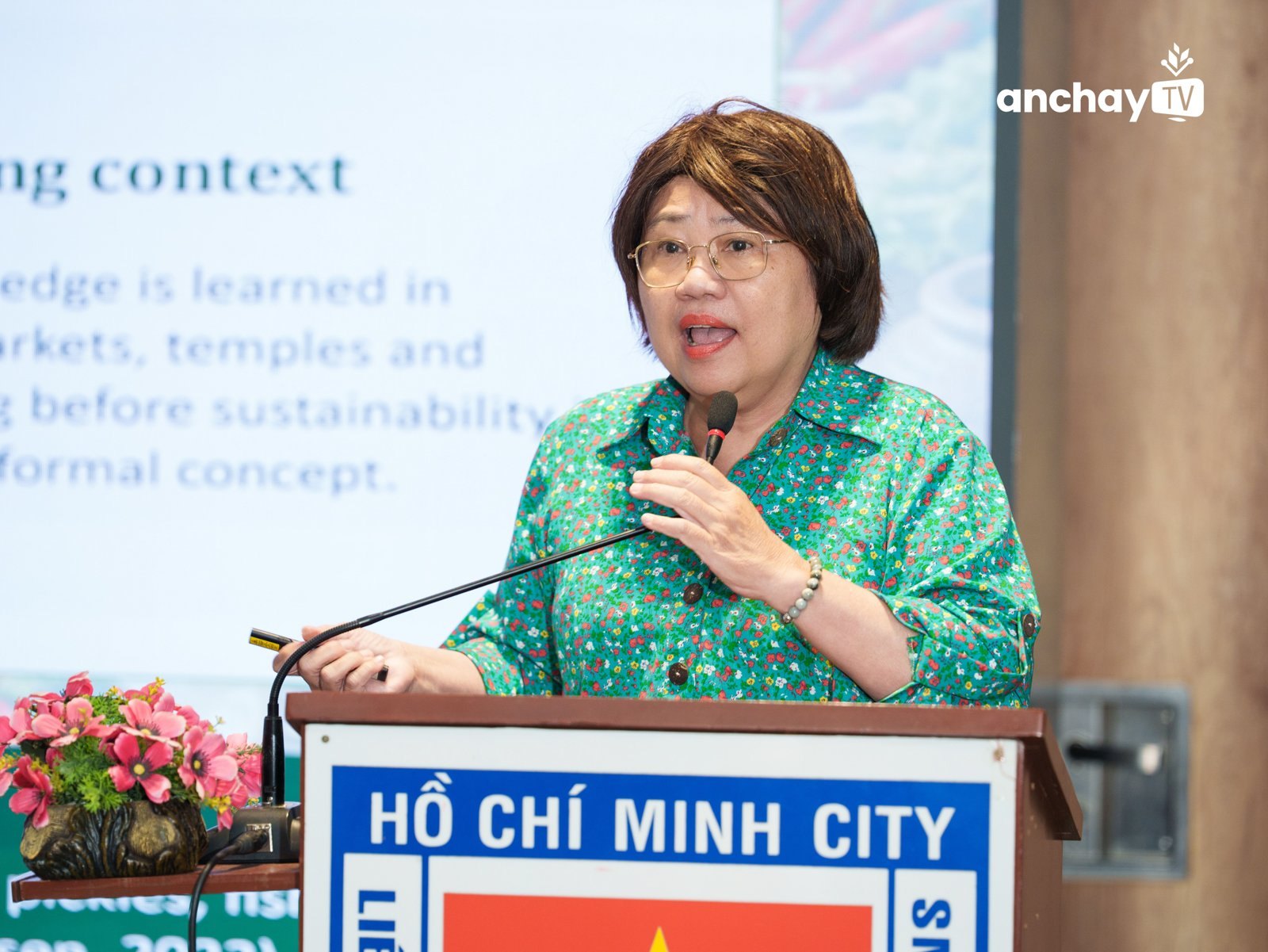
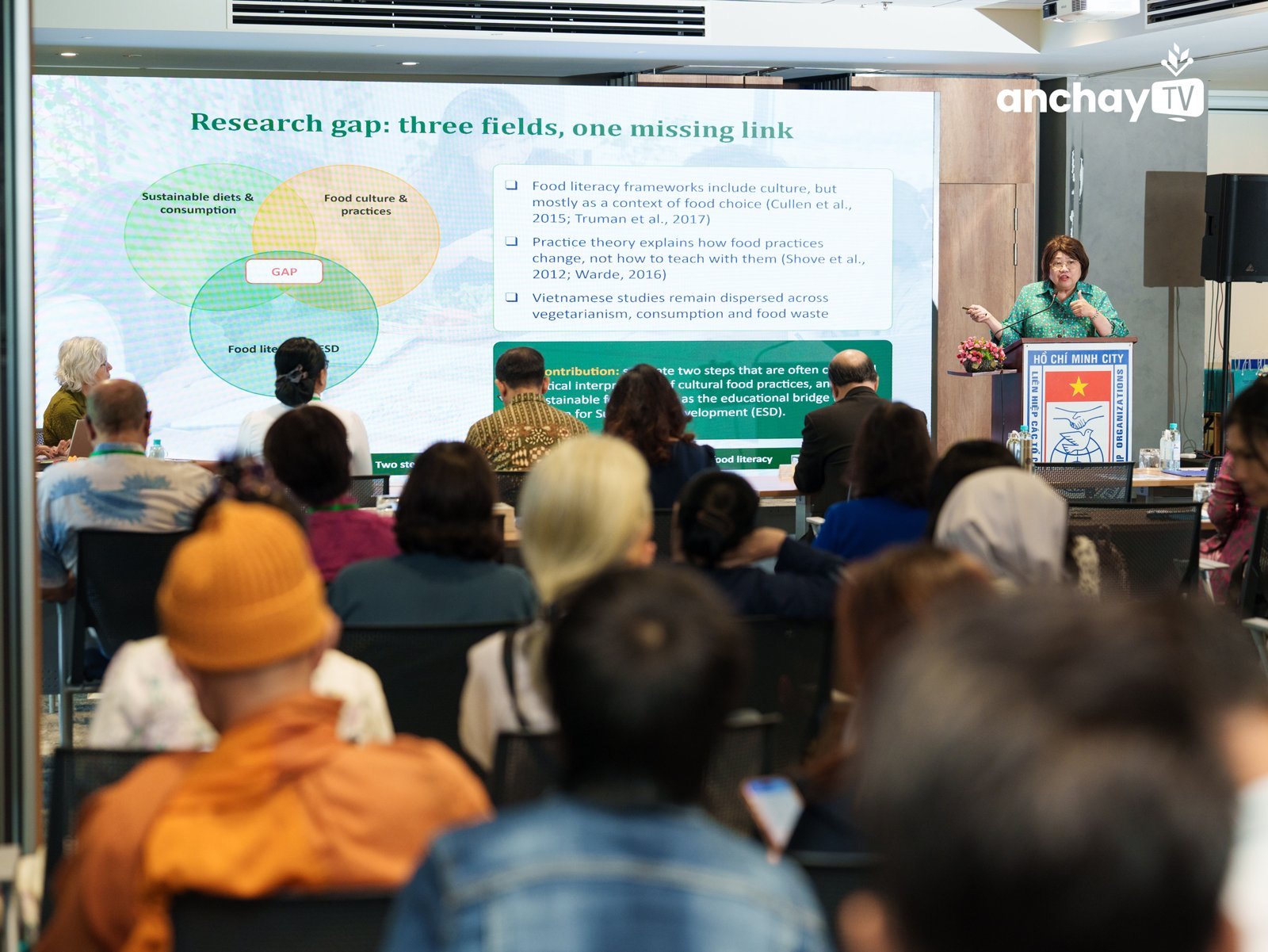
From green cuisine to green education. Dr Trần Cao Bội Ngọc (Faculty of Oriental Studies) presented a paper co-written with Assoc. Prof. Dr Phan Thị Hồng Xuân. The study drew on 32 sources, 24 of them academic, to examine four familiar Vietnamese practices: a plant-leaning diet; eating vegetarian on the first and fifteenth of the lunar month; eating by season and by local market; and the table manners summed up in the saying “mind the pot, mind where you sit”. Their conclusion: culture is a starting point, not evidence. A practice is not sustainable merely because it is traditional, local or plant-based — industrially processed mock meat is one example. The authors proposed five sample lesson designs that could fit inside Vietnam’s 2018 General Education Programme, such as asking pupils to keep a week-long food-waste diary or to compare a home-cooked vegetarian meal with a packaged one.
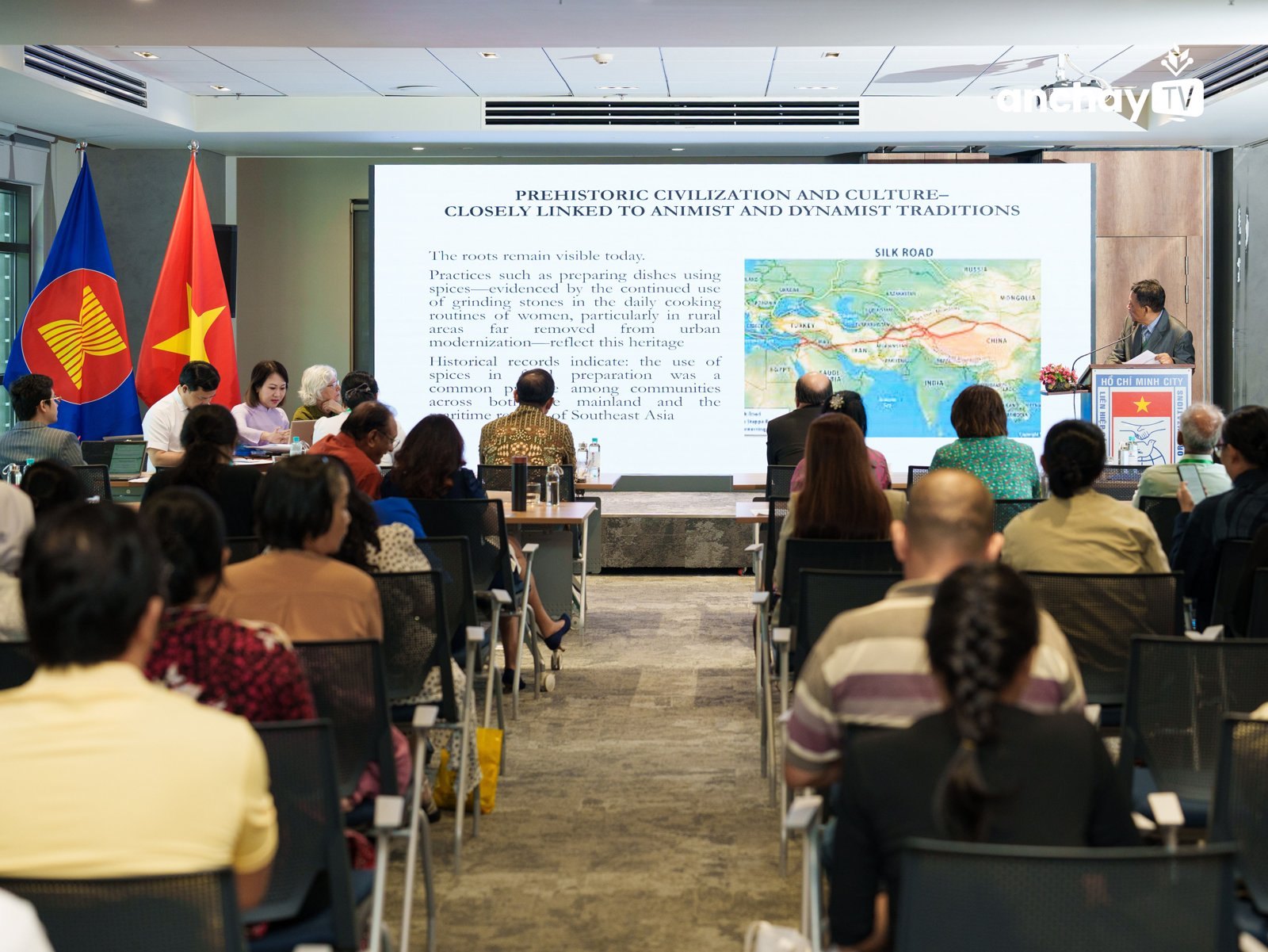
Food, adat and Tri Hita Karana in Bali. Prof. Dr I Ketut Ardhana, President of the International Federation of Social Science Organizations (IFSSO), traced the links between adat customary law, the Tri Hita Karana philosophy and culinary practice in Bali, from prehistoric civilisation and Balinese cosmology to contemporary cooking traditions, and set out what indigenous knowledge contributes to protecting biodiversity and the environment.
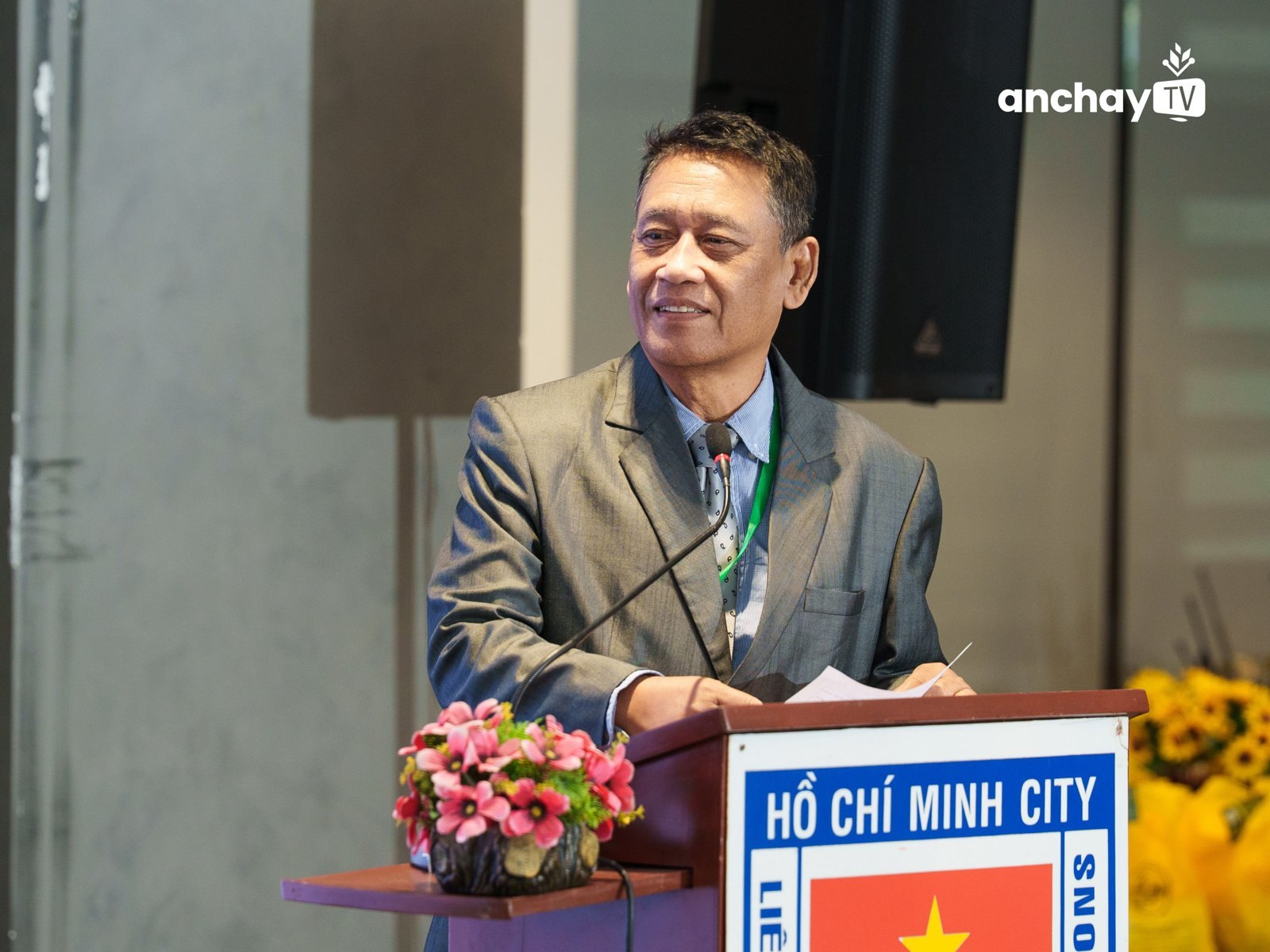
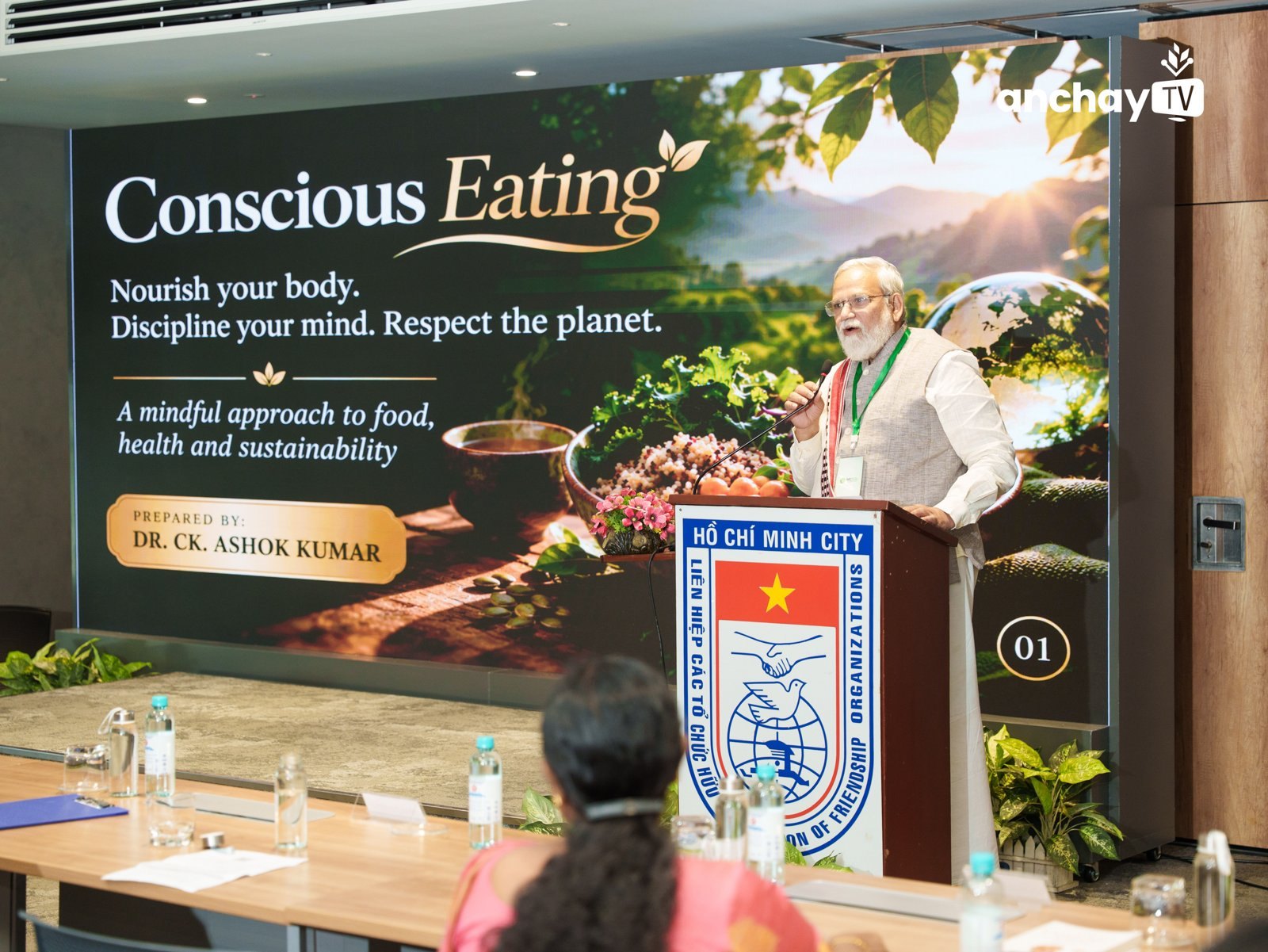
Conscious eating: eat to live, not live to eat. Dr C.K. Ashok Kumar, founder and President of First World Community, a council member and former IVU Ambassador for India and South Asia, spoke about conscious eating grounded in ahimsa, personal responsibility and respect for nature: nourish the body, train the mind, respect the planet.
Panel 1: medicine, nutrition, compassion and soft power
Panel 1 was chaired by Assoc. Prof. Dr Phan Thị Hồng Xuân, Mr Hồ Xuân Lâm and Dr Vythilingam Pillay (former President of the Malaysian Vegetarian Society, MVS). It ran from 10:15 to 11:30 with four papers.
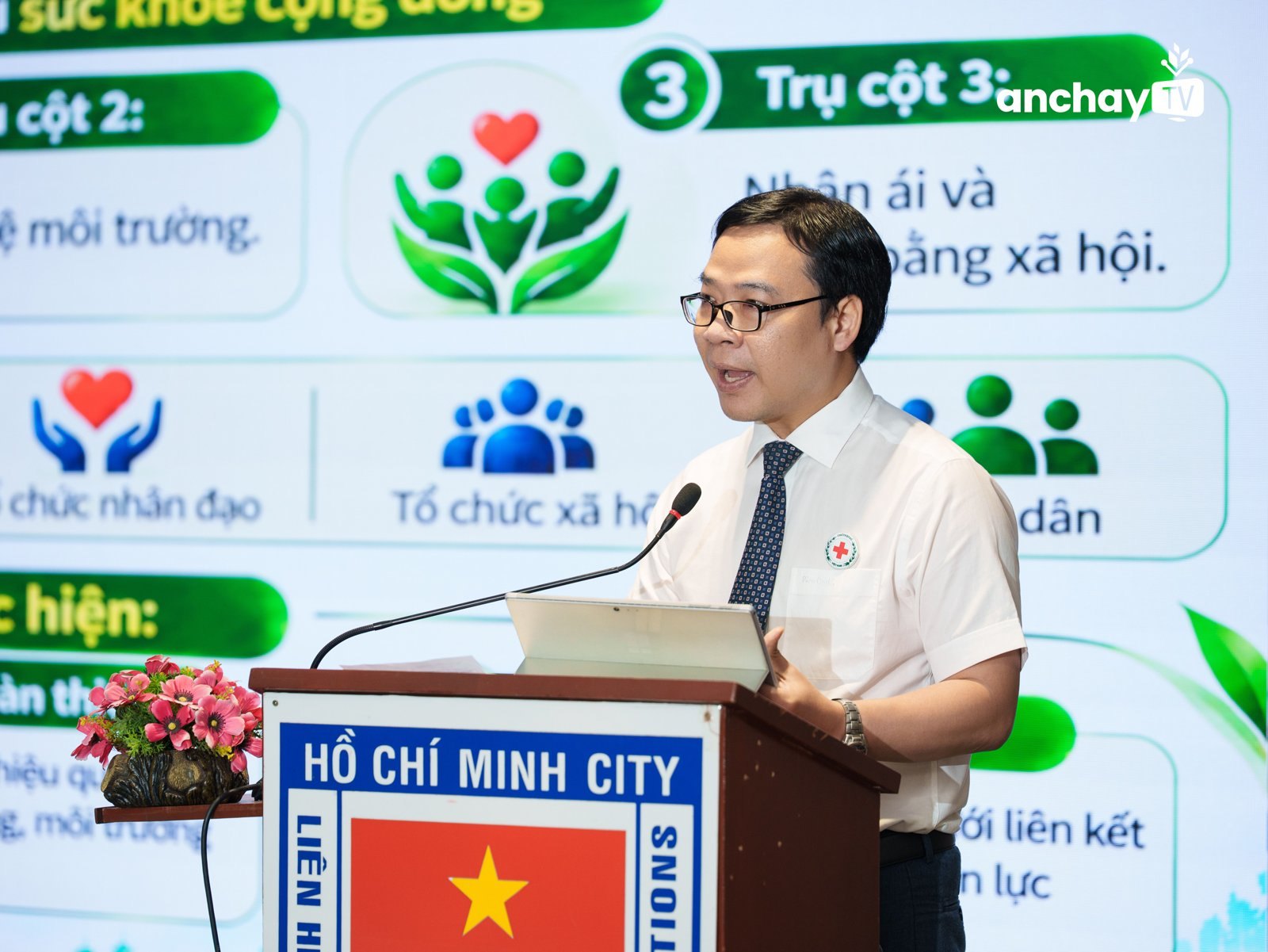
Dr Nguyễn Minh Nhựt, President of the Ho Chi Minh City Red Cross: “Green cuisine and public health: spreading the value of compassion for sustainable development”, approaching vegetarian food through compassion and social welfare.
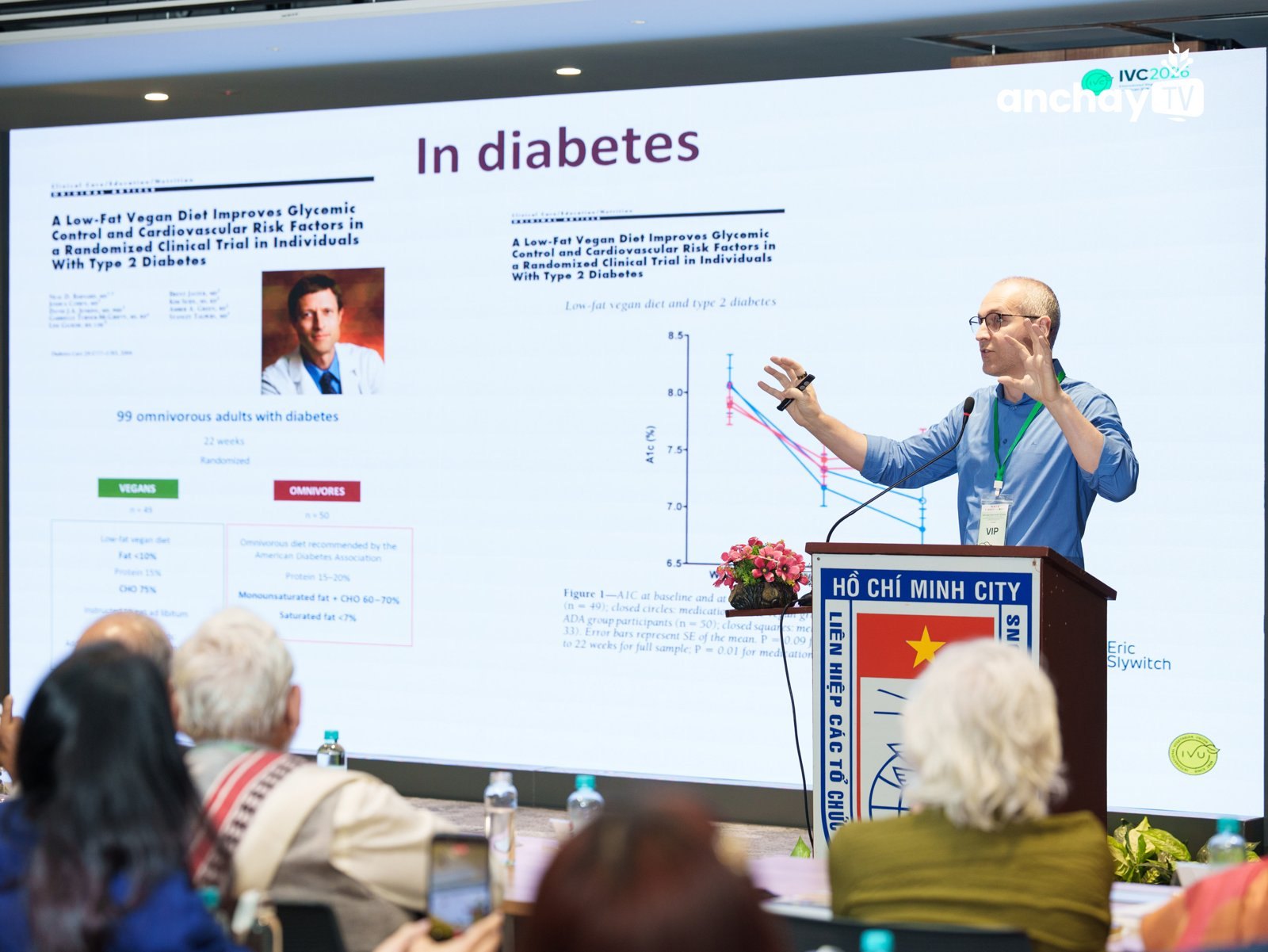
Prof. Dr Eric Slywitch (Brazil), Director of the IVU’s Medical and Nutrition Department: “Diabetes and vegetarian diets: prevention and treatment”. He explained the mechanism of insulin resistance and cited a 12-week randomised trial in people with type 1 diabetes comparing a whole-food vegan diet (75% of energy from carbohydrate, 10% from fat) with portion control. The preventive measures he stressed were movement, less visceral fat, enough sleep, less saturated fat, and avoiding simple sugars and ultra-processed foods.
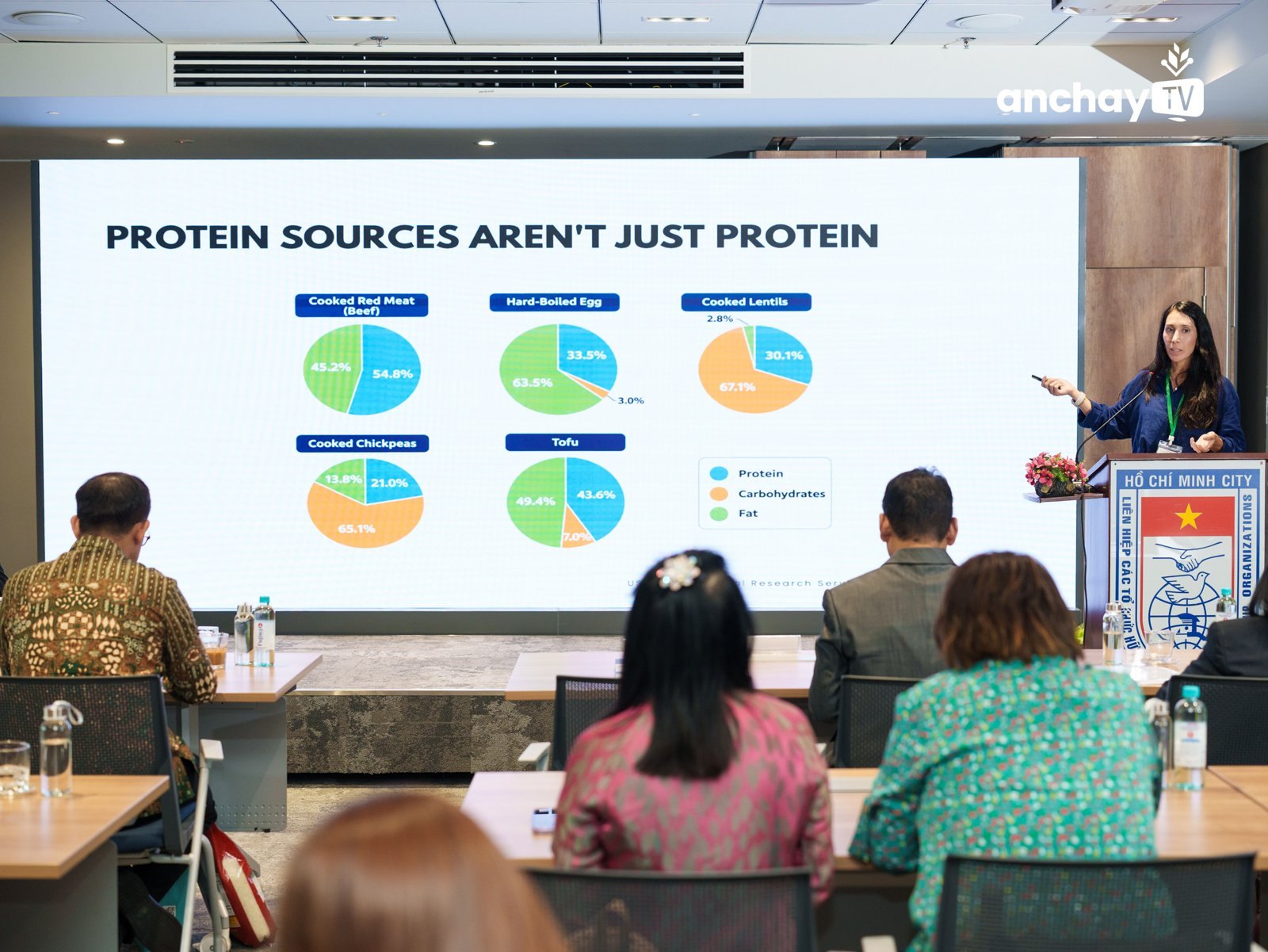
Dietitian Maria Julia Cauduro Rosa (RD): “Protein adequacy in vegetarian diets: simple strategies to get it right”. With Prof. Slywitch, she stressed getting enough protein, vitamin B12, iron and zinc.
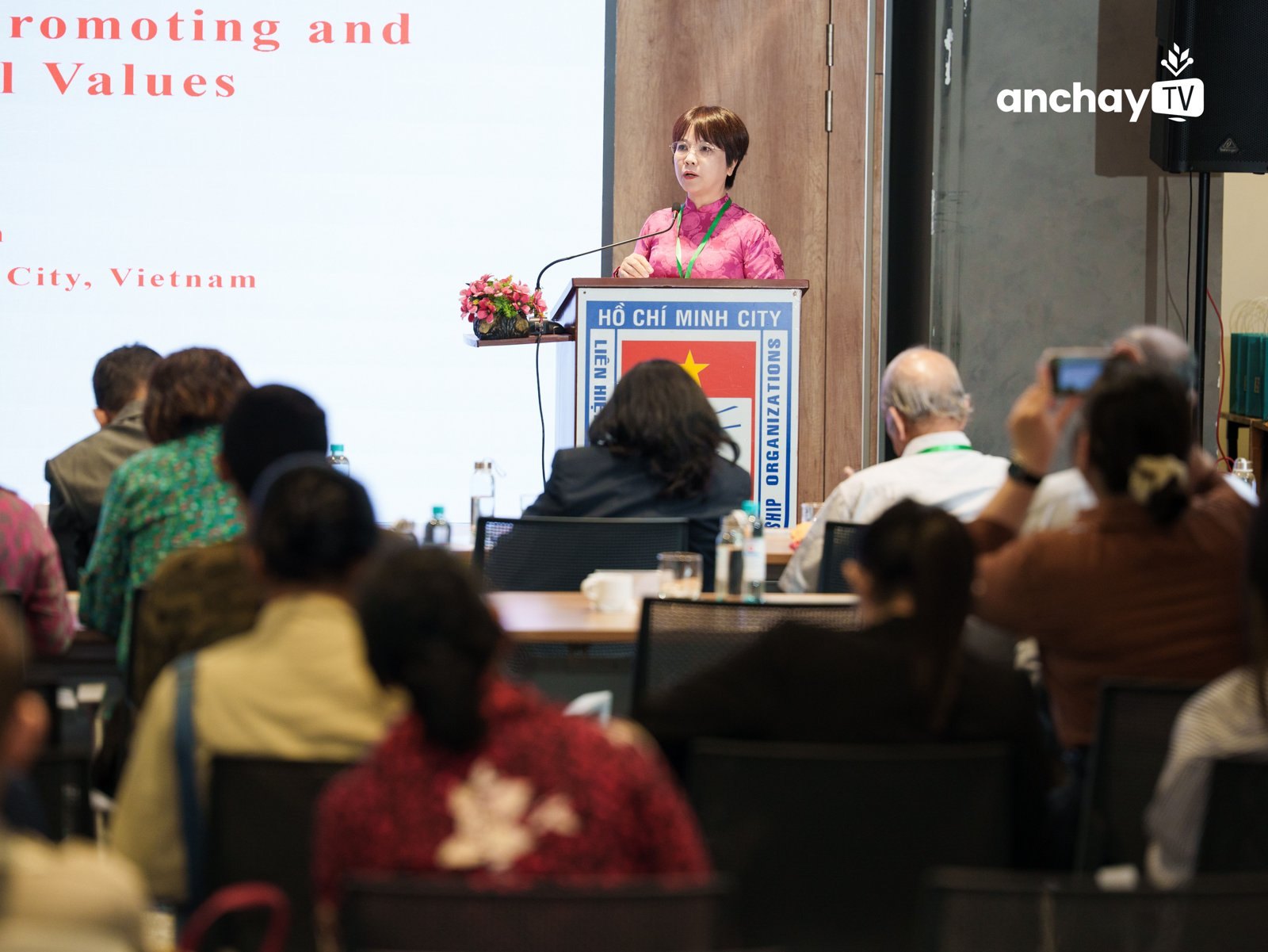
Dr Nguyễn Phương Lan, Thủ Dầu Một University: “Vietnamese and Indian vegetarian food cultures: a soft-power resource for promoting and spreading cultural values”.
Panel 2: cities, heritage and public policy
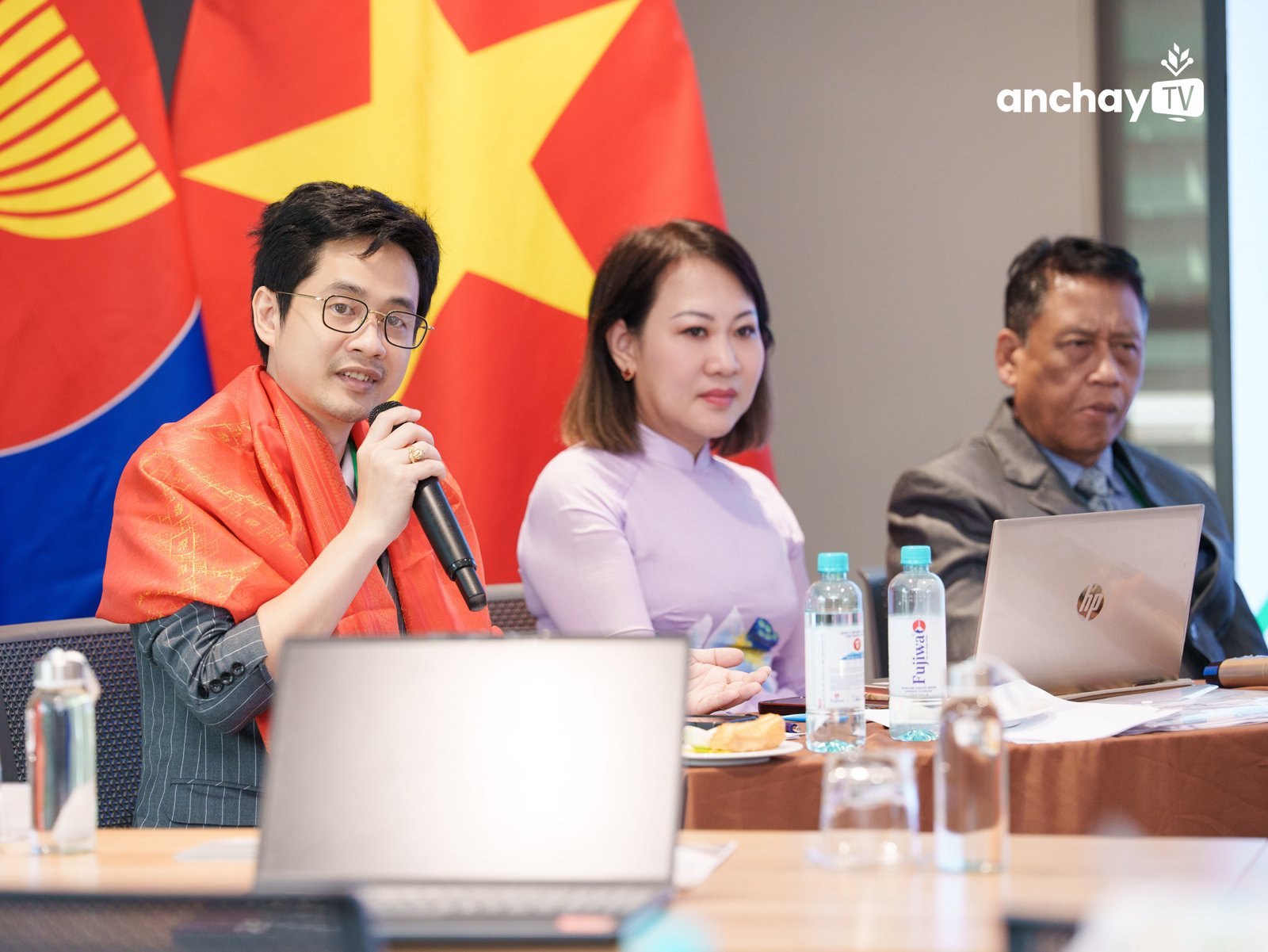
Panel 2 was chaired by Assoc. Prof. Dr Phan Thị Hồng Xuân, Prof. Dr I Ketut Ardhana and Mr Lê Vinh Thao (IVU Representative for Asia and founder of Anchay TV). It ran from 13:30 to 15:00.
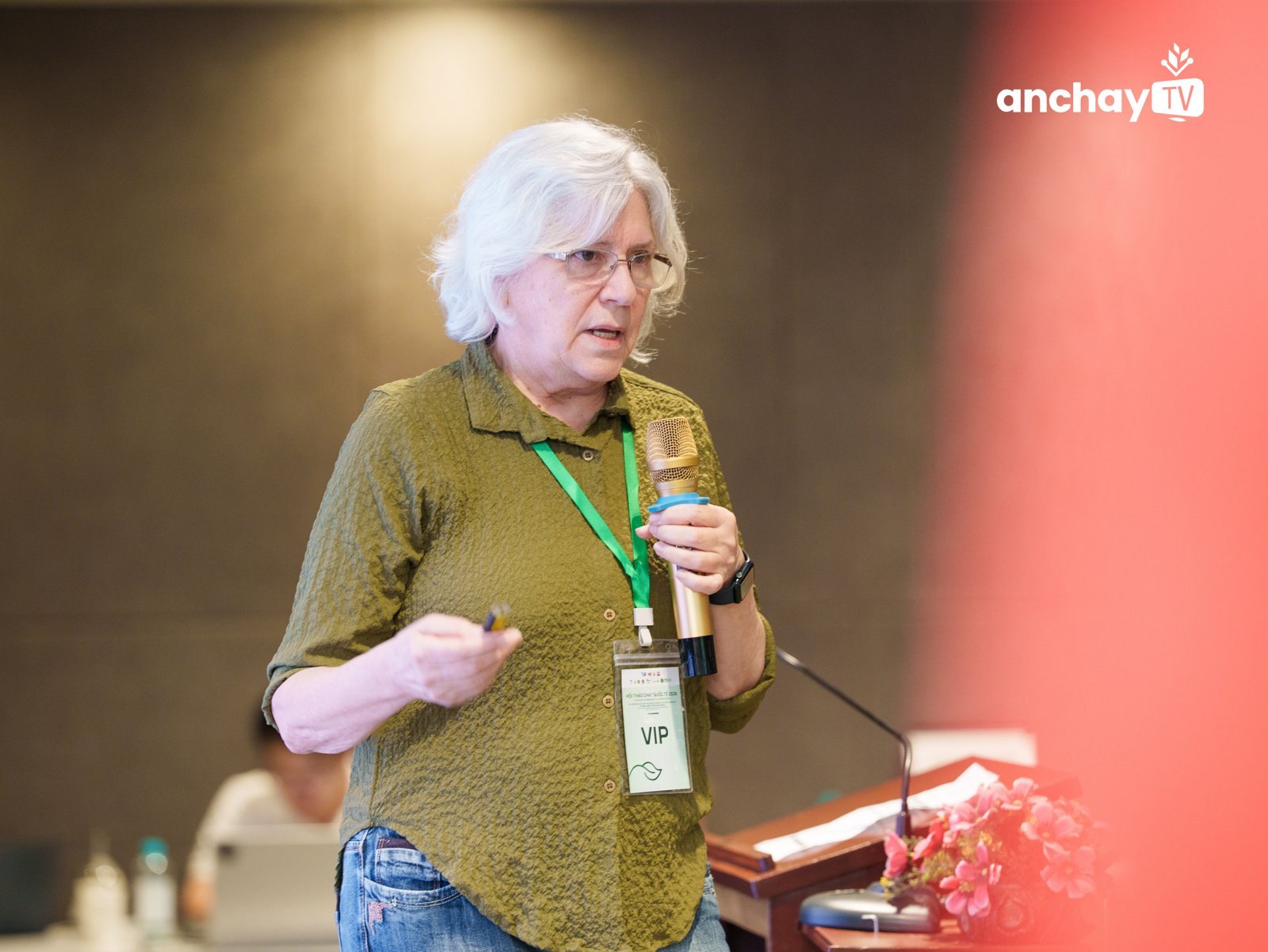
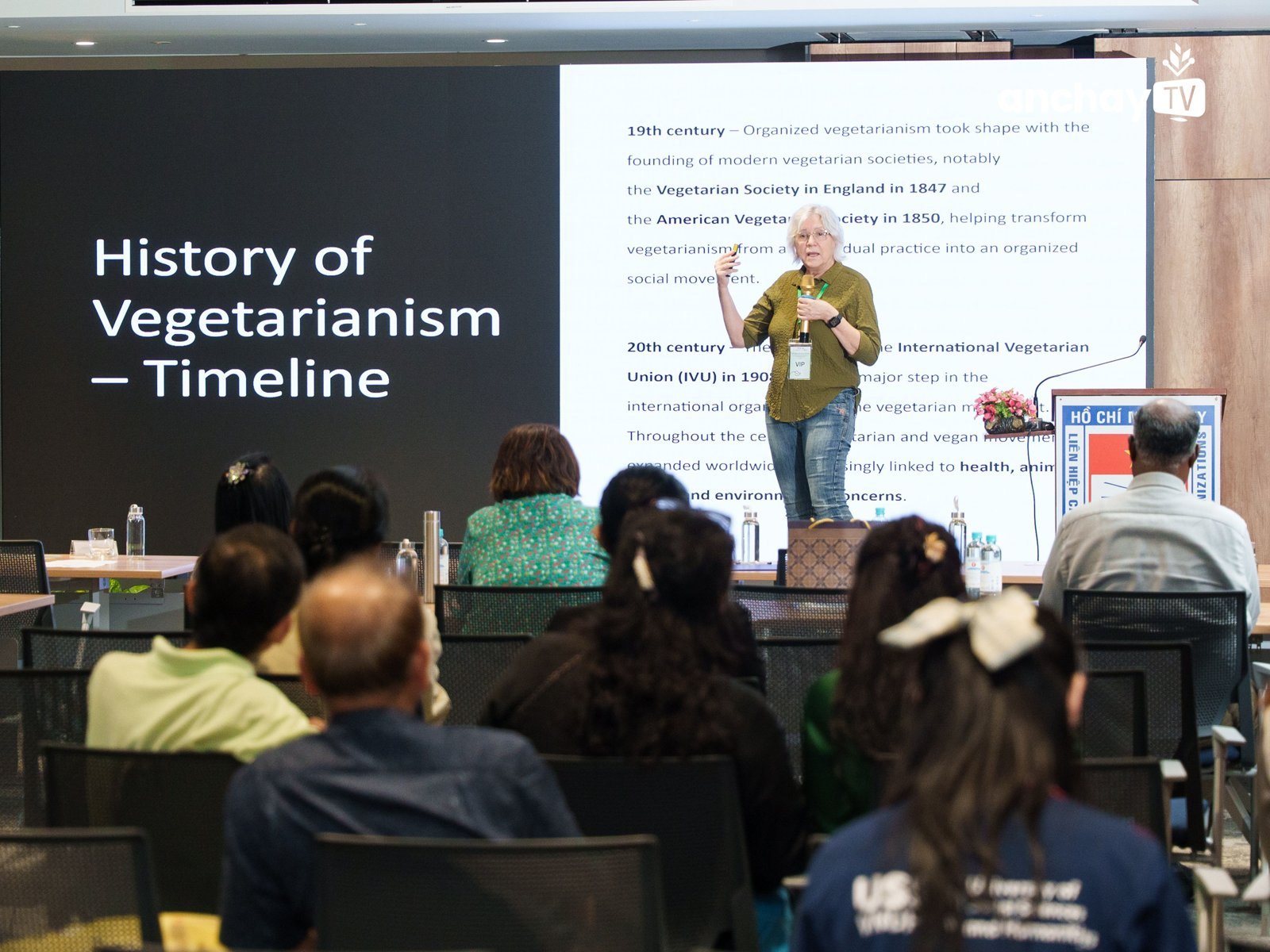
Ms Marly Winckler: “Understanding vegetarianism and its role in modern urban civilisation”. She traced the history of vegetarianism from ancient India and Greece to the founding of the IVU in 1908, and recounted the Meatless Monday initiative that the Brazilian Vegetarian Society brought into São Paulo’s school meals in 2011, a network serving around two million meals a day. Her message: one public policy can change millions of food choices.
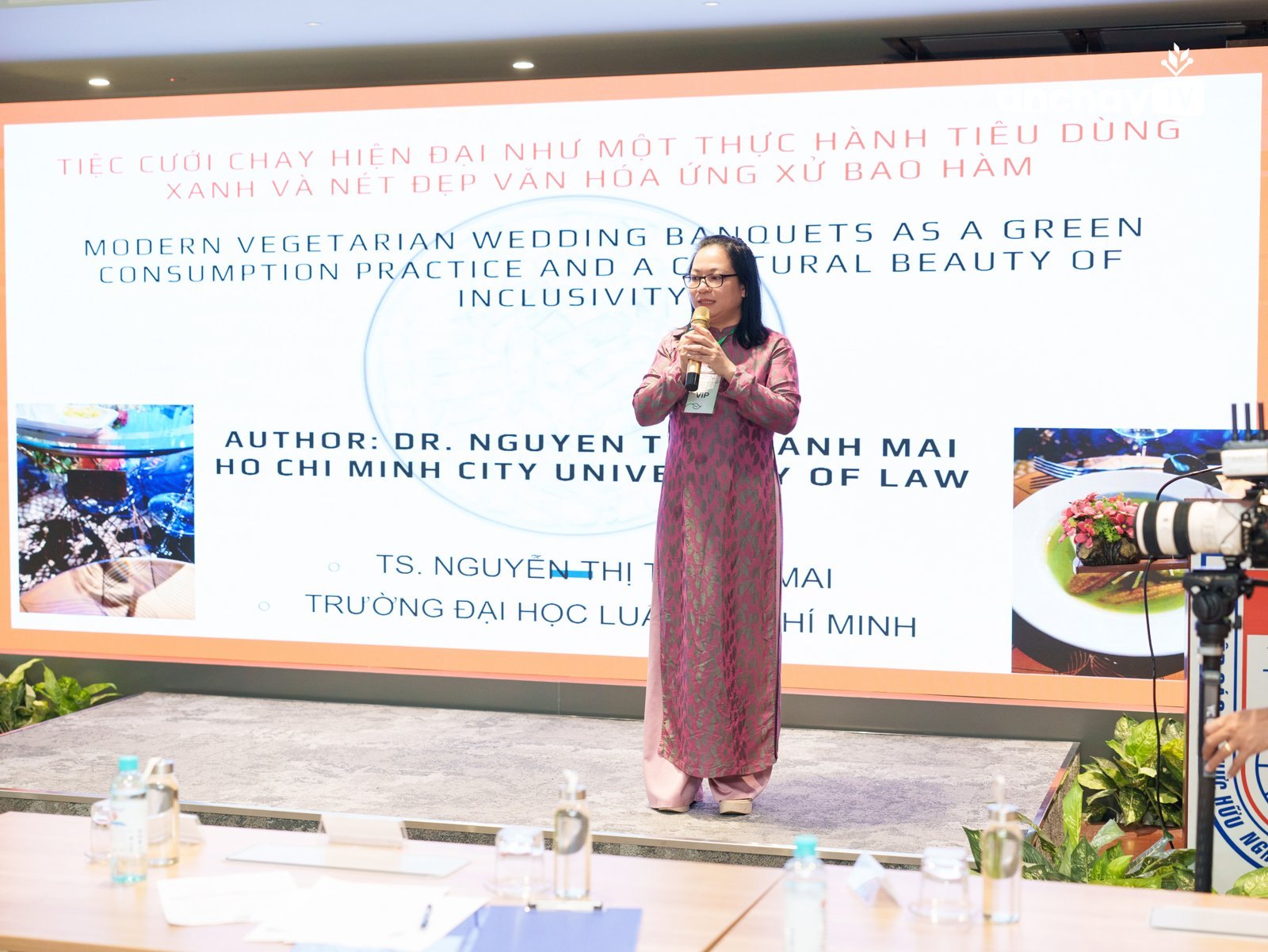
Dr Nguyễn Thị Thanh Mai, Ho Chi Minh City University of Law: “The modern vegetarian wedding banquet as a green consumption practice and a cultural beauty of inclusivity”.
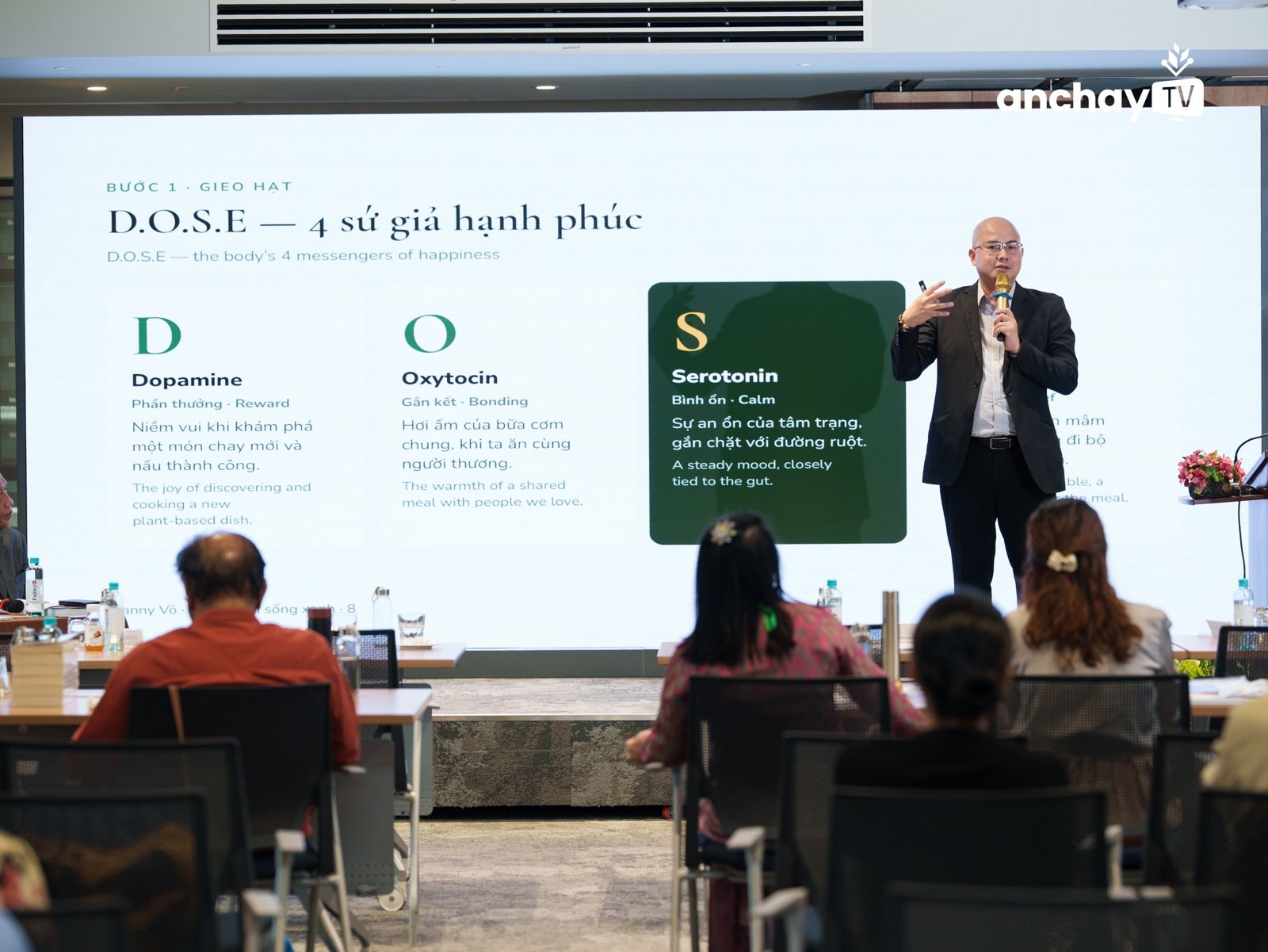
Prof. Dr Sudarman, Vice Rector of Imam Bonjol Padang State Islamic University (Indonesia): “Rimba Larangan and indigenous knowledge: protecting forests, natural food sources and green education in West Sumatra”. Mr Võ Thành Đăng (Danny Võ), Head of the Mental Health Department at the Health Sciences Research Institute of the Vietnam Military-Civilian Medical Association: “Spreading a green lifestyle: vegetarian food, mental health and community strength”.
The conference slide deck also carried papers on Balinese vegetarian lawar and Vietnamese vegetarian salad (I Dewa Ayu Febriani, Ida Bagus Agung Gunarthawa), on jagung titi in East Nusa Tenggara (Dr Fransiska D.S. Sunaryo, A.A. Ayu Rai Wahyuni) and on “Chess and vegetarianism” (Võ Phan Mỹ Trà, Đào Hiểu Đông, Assoc. Prof. Dr Phan Thị Hồng Xuân).
Discussion: four questions for four speakers
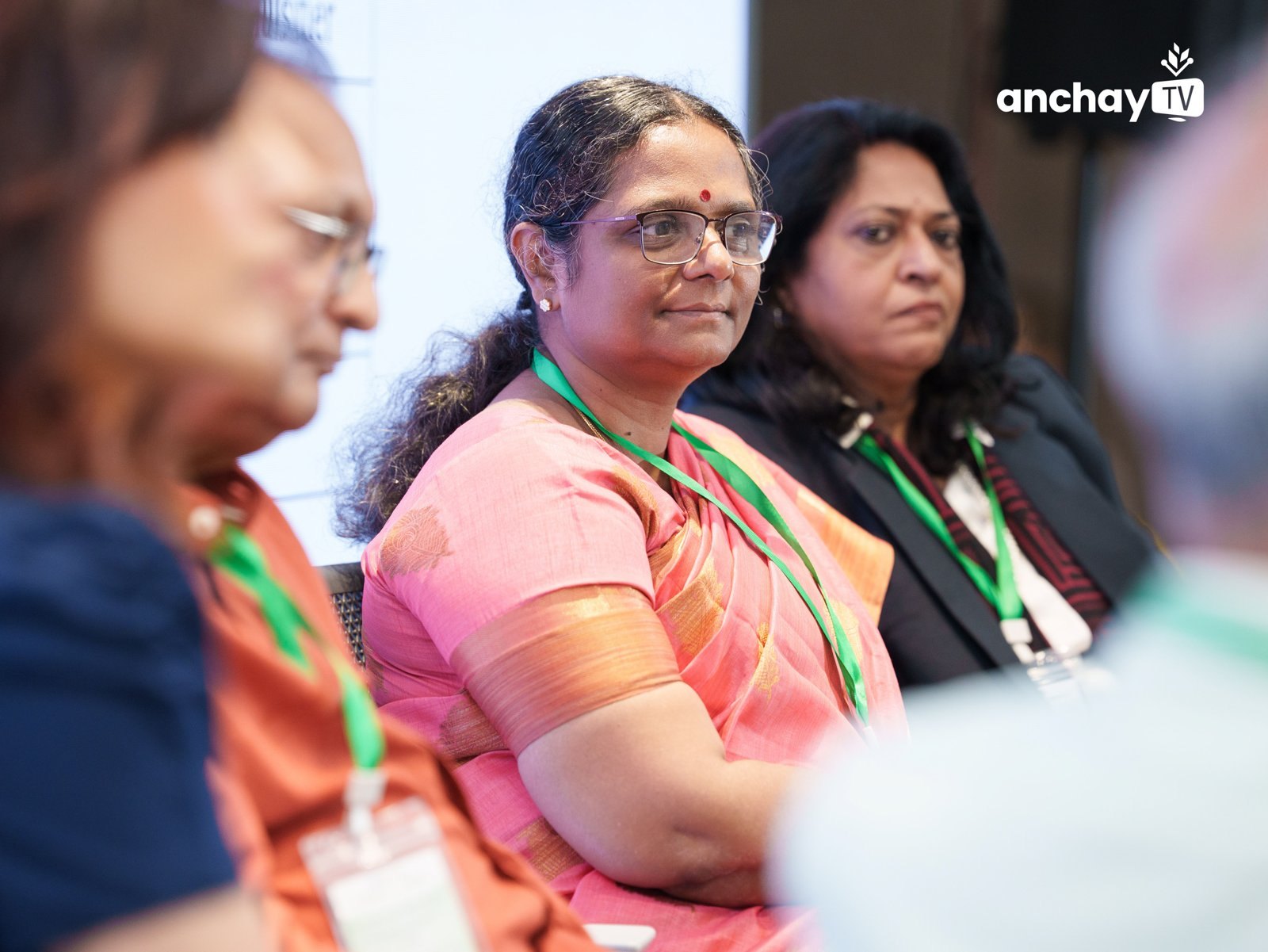
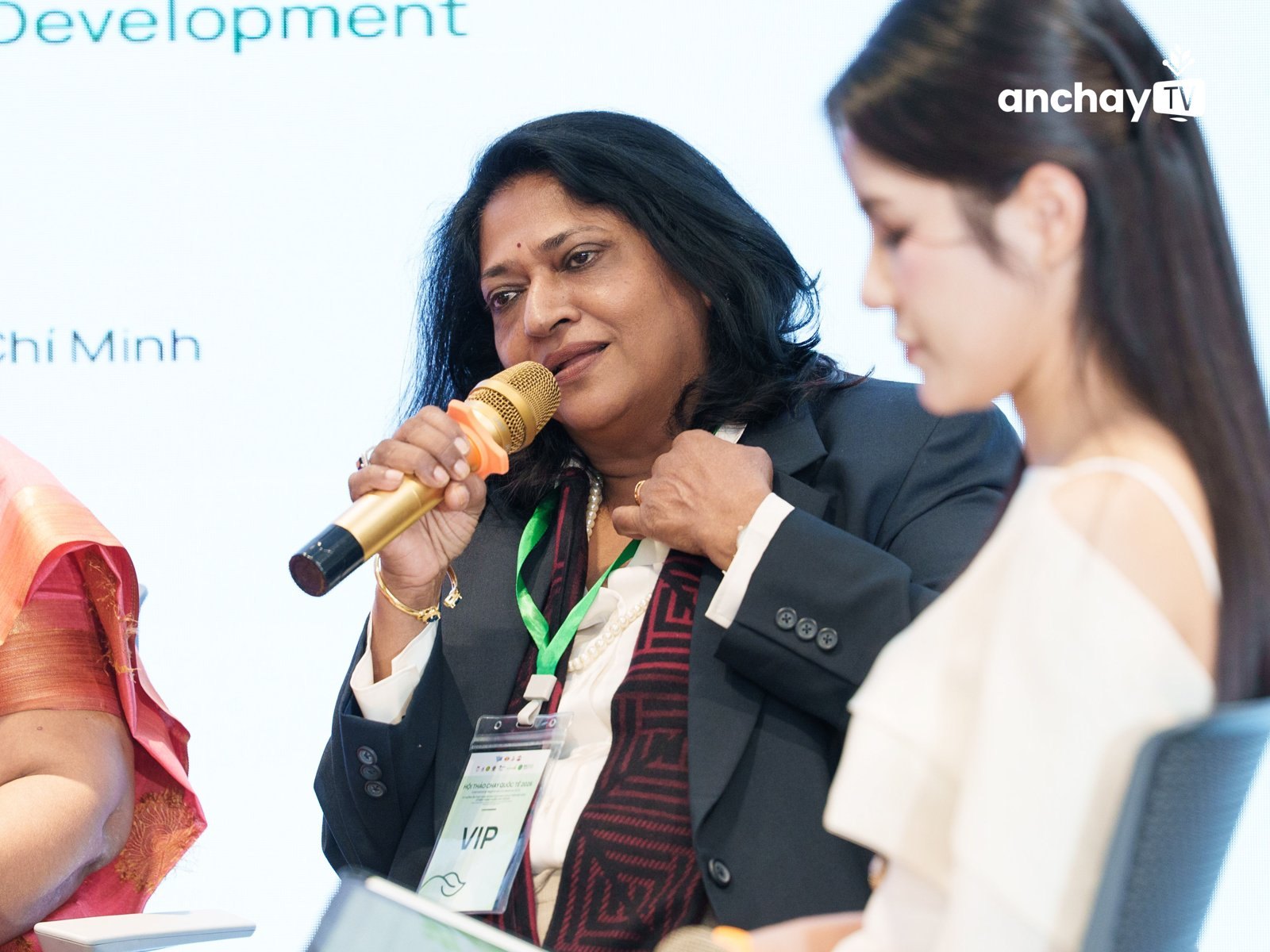
The afternoon closed with a discussion among the international guest speakers, hosted on stage by the conference MC, each answering one question tied to their own talk.
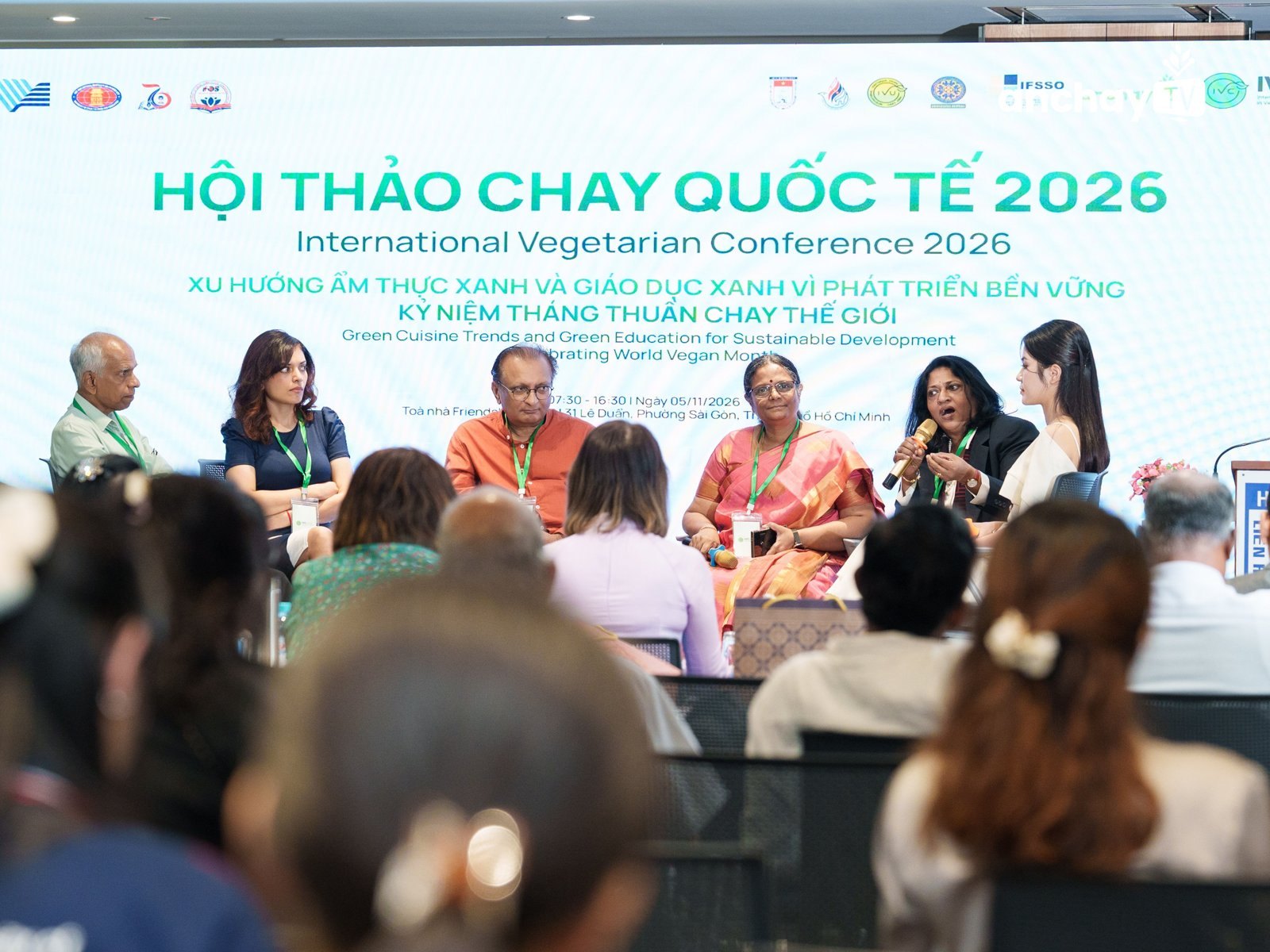
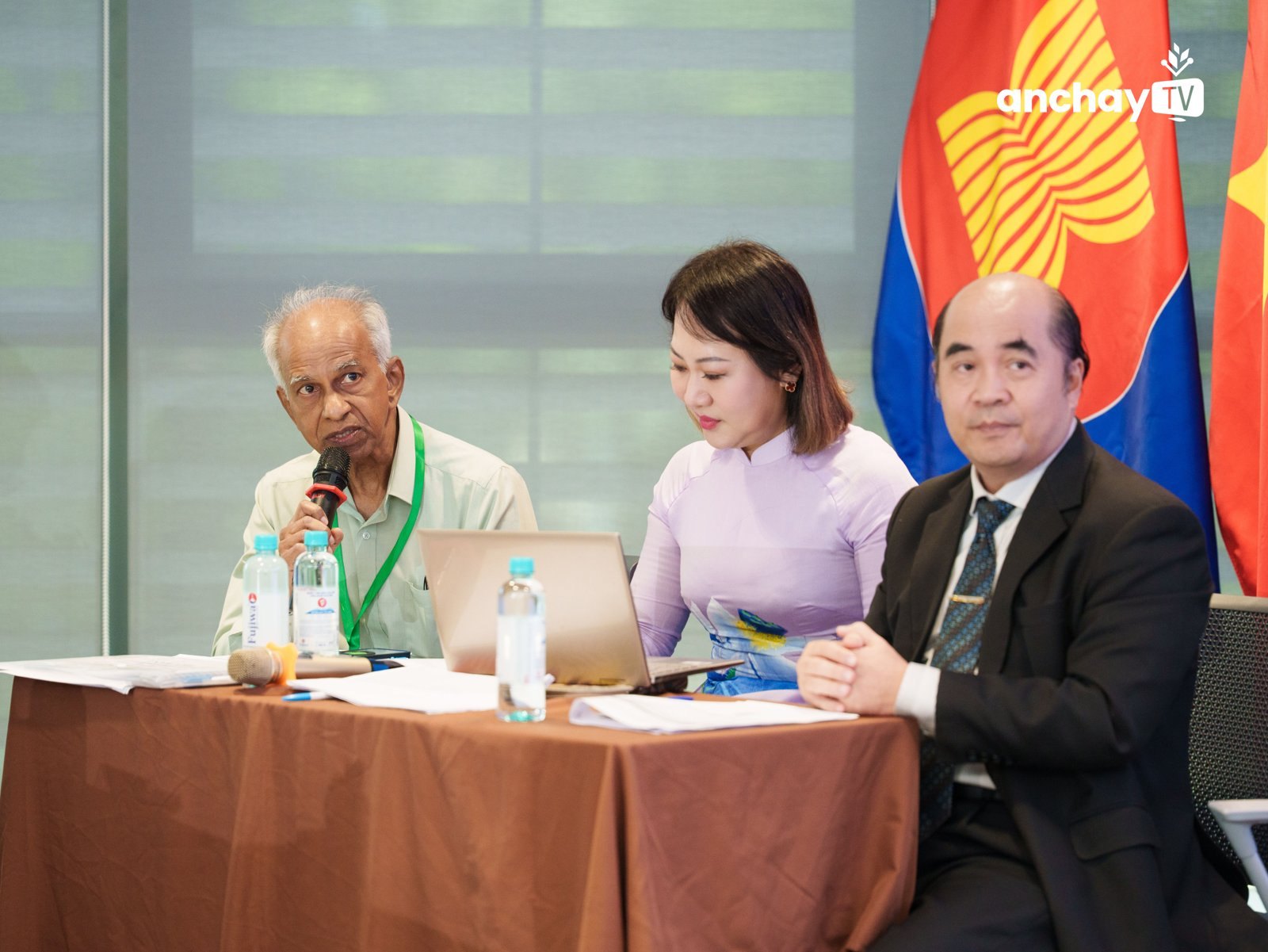
Dr Vythilingam Pillay (Malaysia), MVS adviser — “How safe is your food? Food additives and vegan choices”. The question: what is the single habit Vietnamese consumers should be taught when they pick a packet off a supermarket shelf?
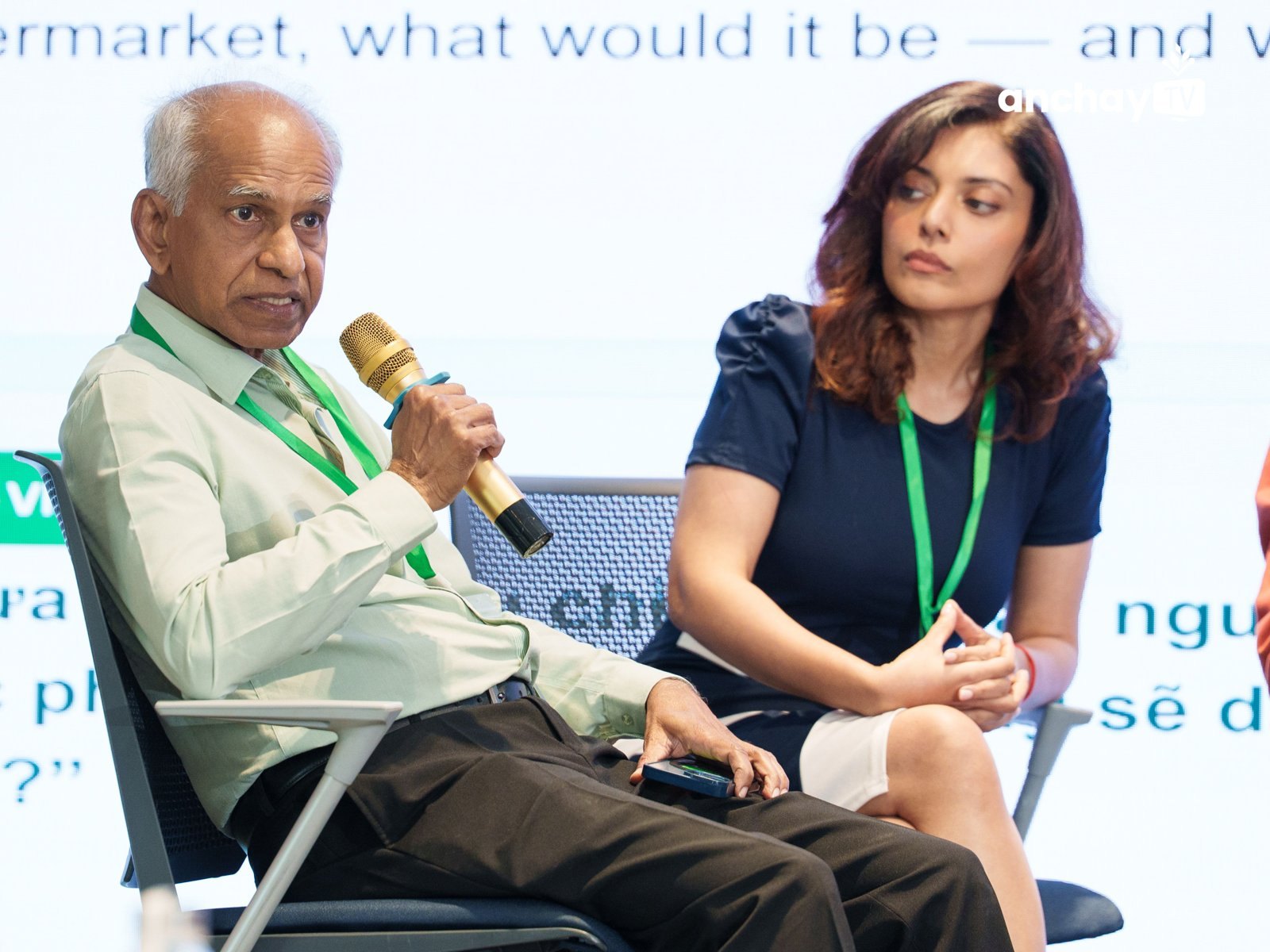
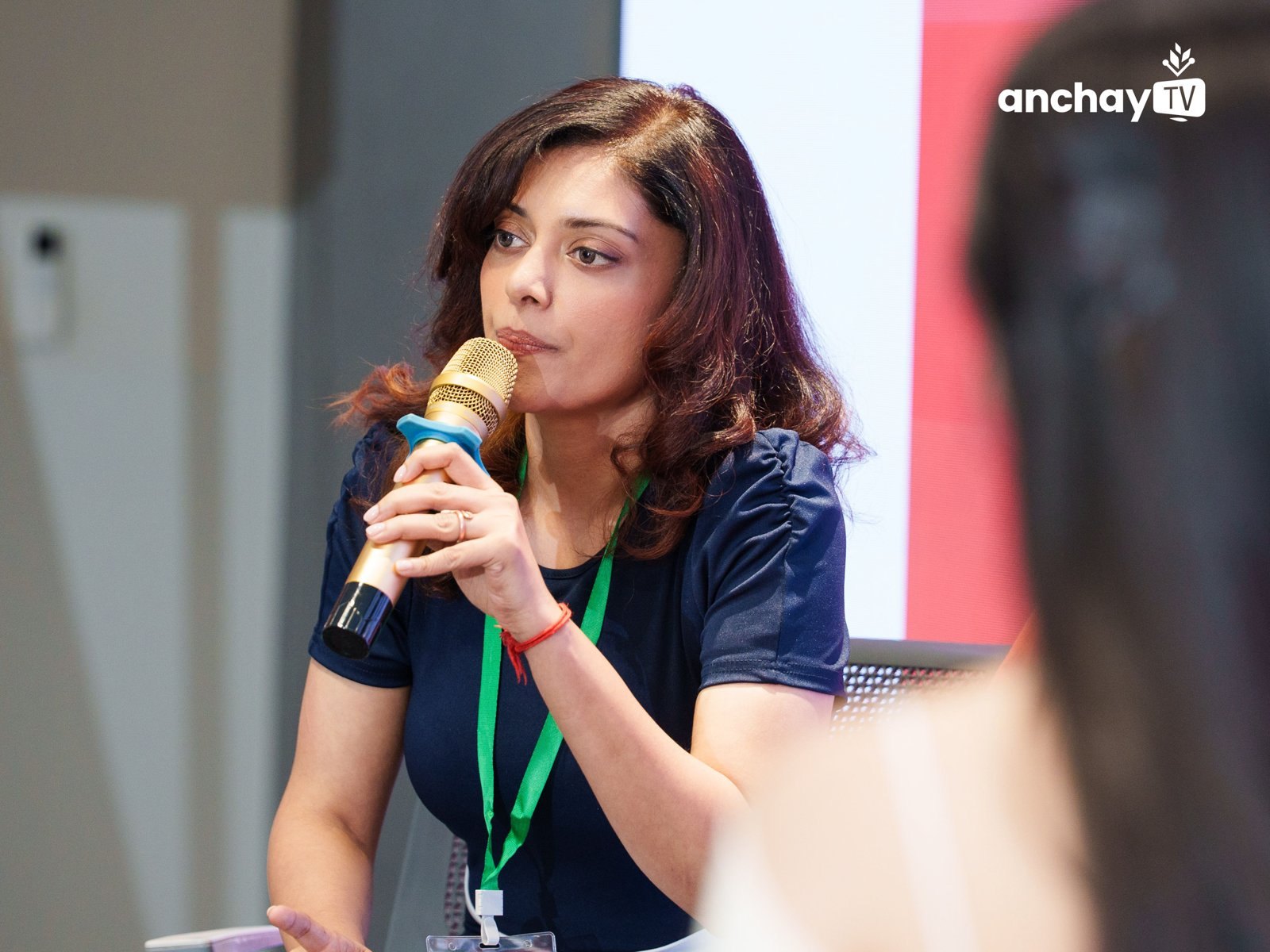
Ms Sangeeta Krishnasamy (Malaysia), head of the Health360 Summit organising committee — “Food, mood and mental health”. The question: how should tomorrow’s first meal change so that an exhausted brain begins to be treated by food?
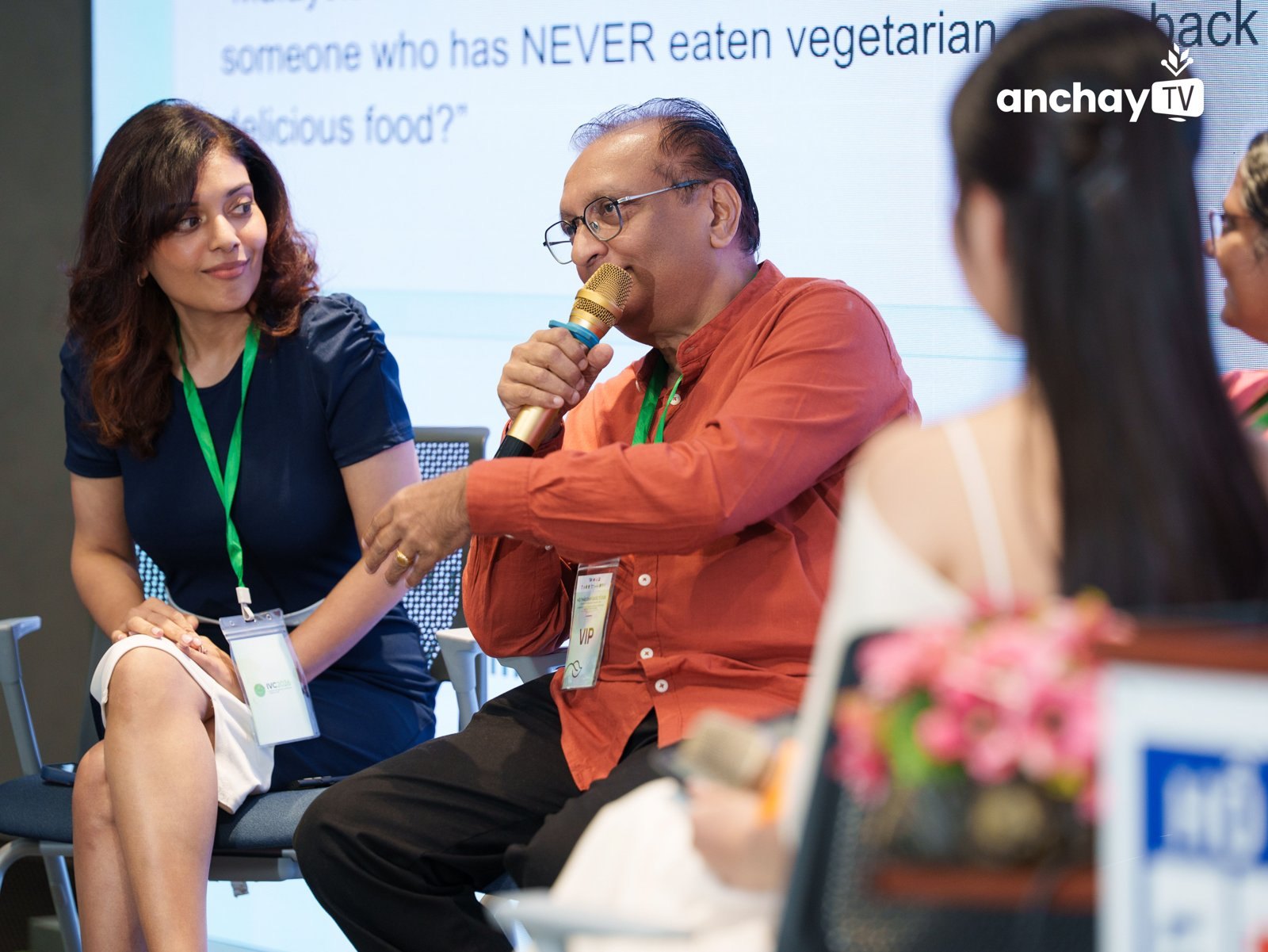
Mr Raj Kumar Seth (Malaysia), Vice President of the Asia Pacific Vegetarian Union — “The vegetarian community and green living”. The question: what brings someone who has never eaten vegetarian back for a second vegetarian meal — health, belief or good food?
Prof. Dr C.V. Jayanthy (India), IVU adviser — “Yoga and plant-based nutrition in type 2 diabetes”. The question: what is the smallest, easiest first-week step for a 50-year-old woman with diabetes who has no time for yoga or for cooking separate meals? The session ended with one question for everyone: each speaker gave the audience a single sentence to take home to dinner that evening. Anchay TV will add each speaker’s answers once the recording is available.
Certificates and thank-you letters
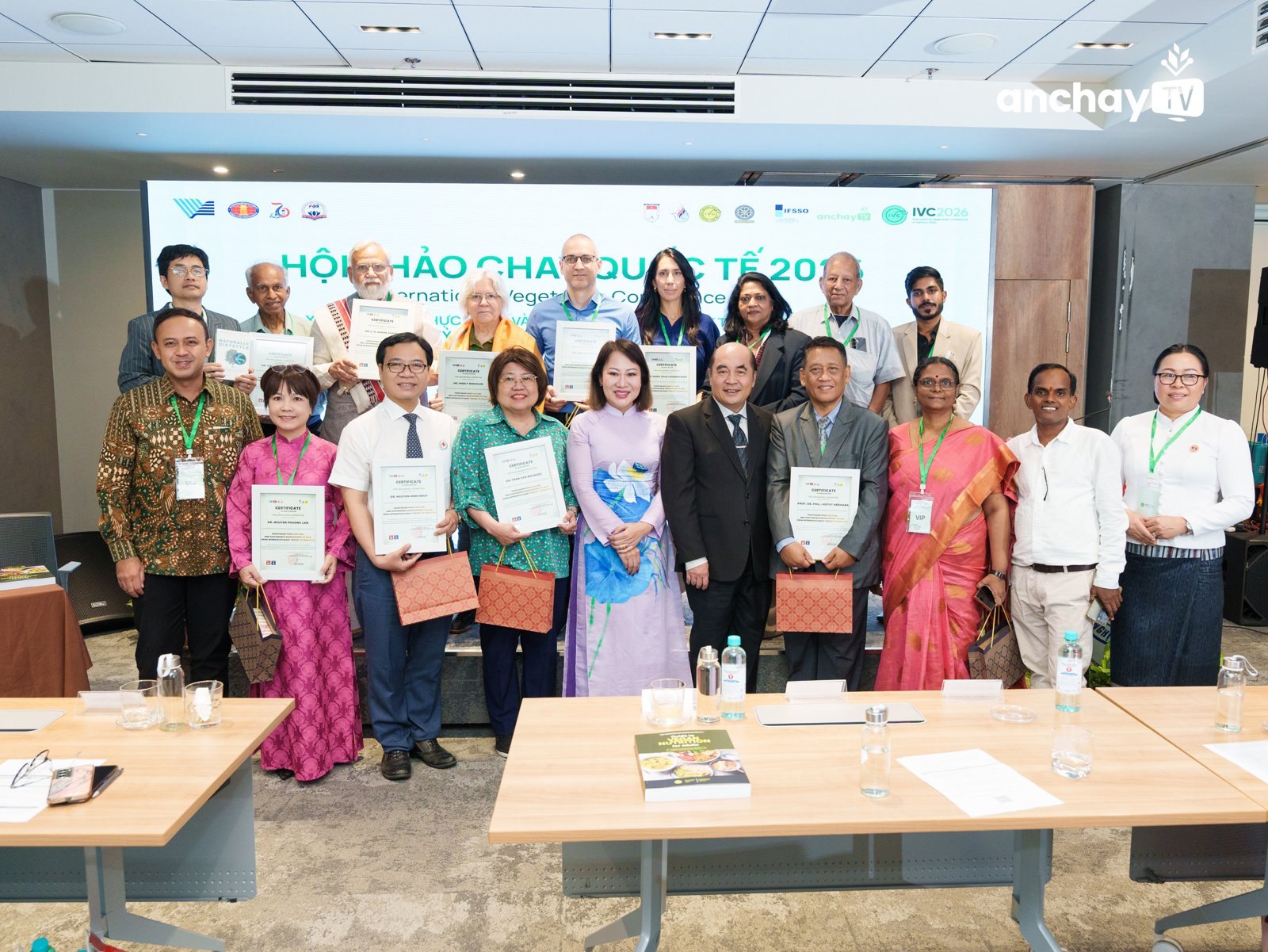
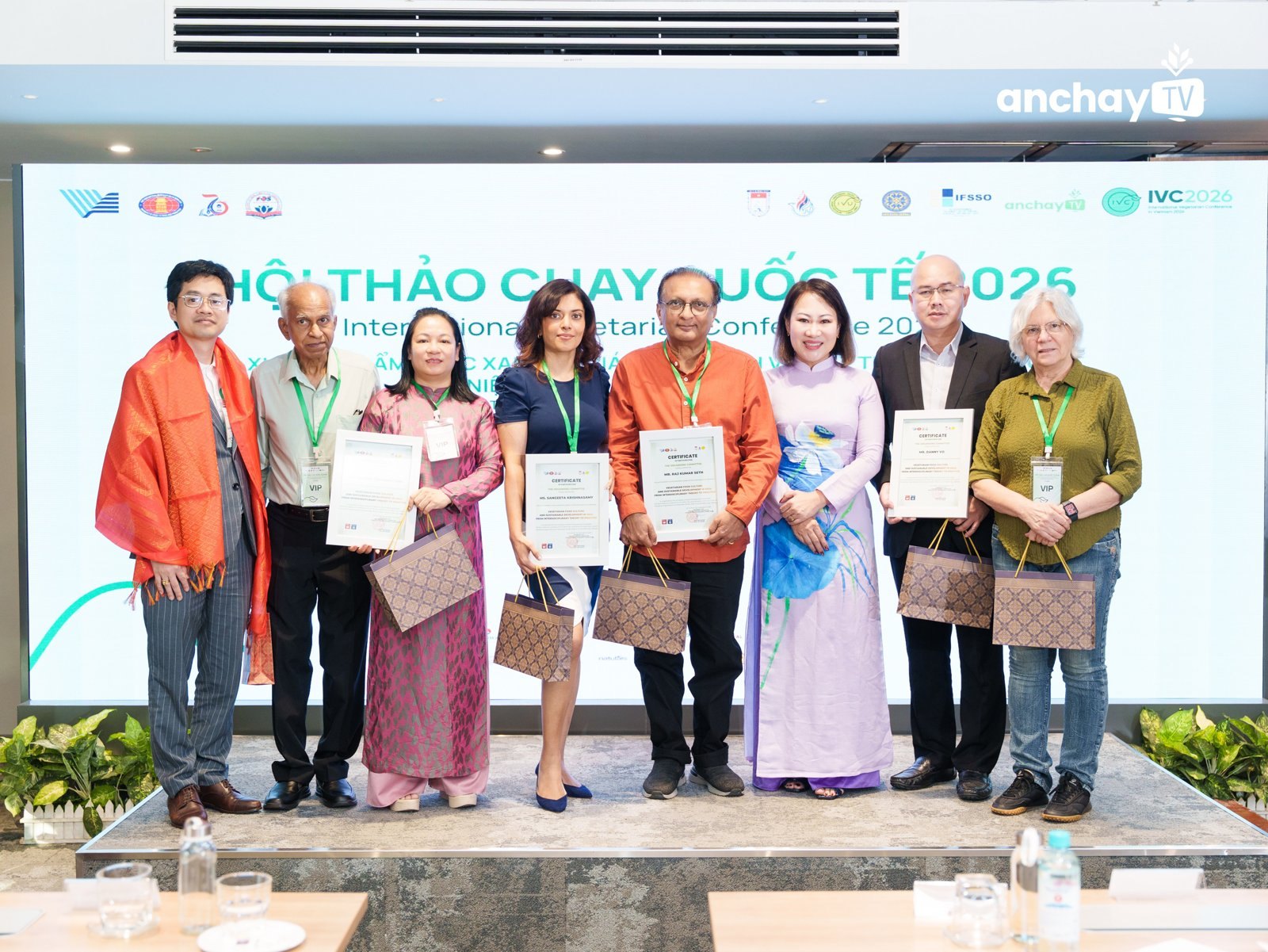
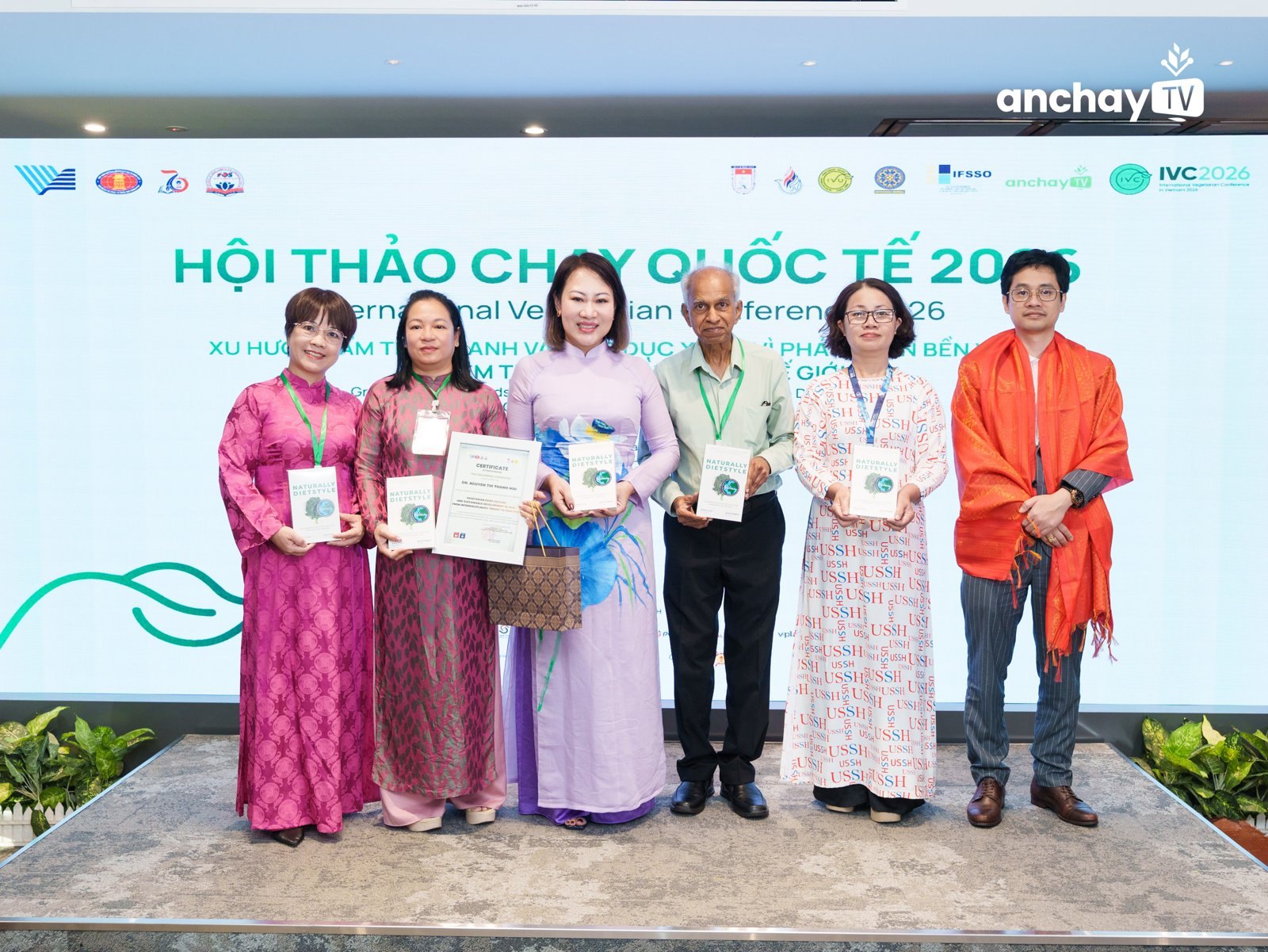
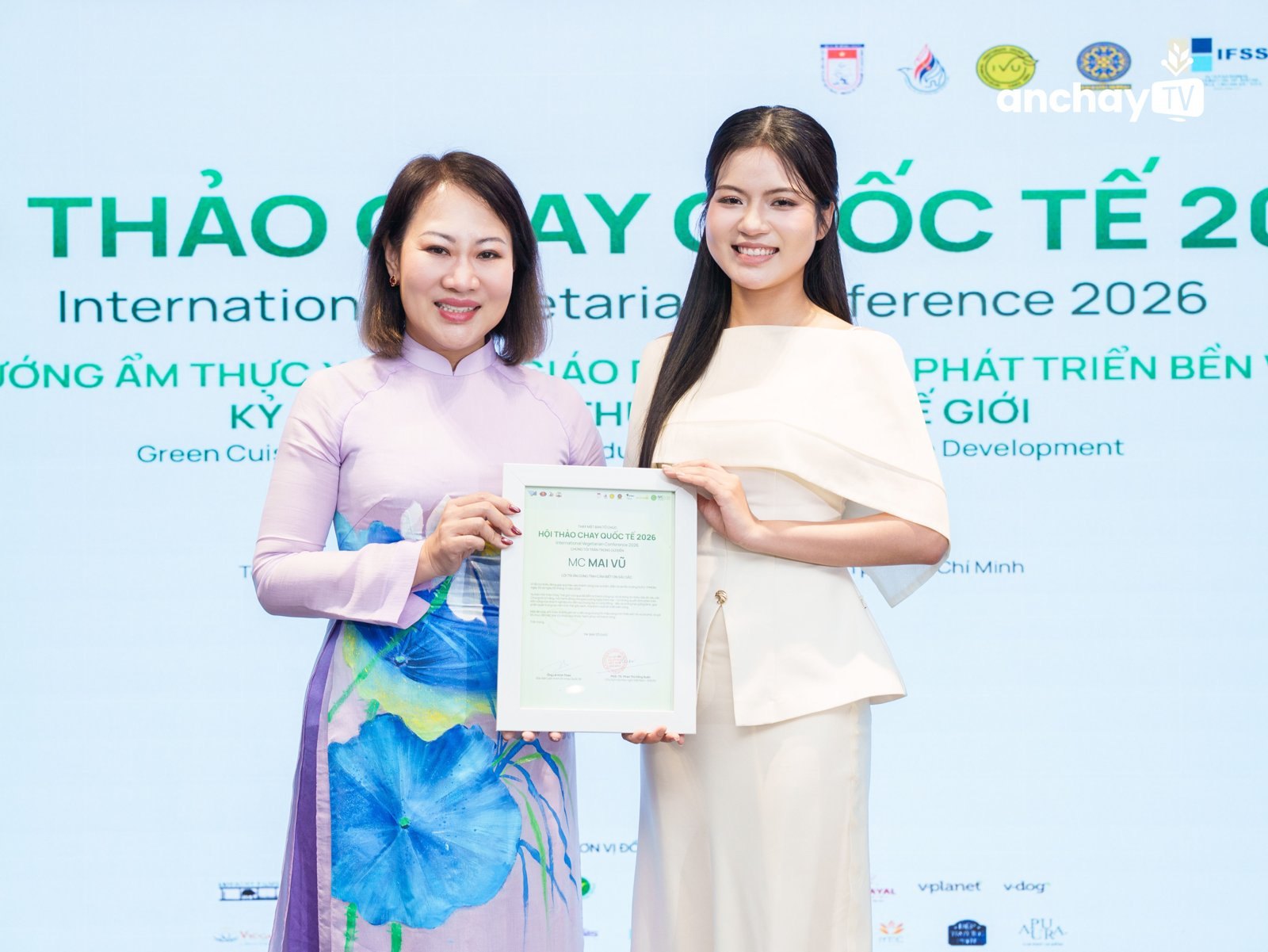
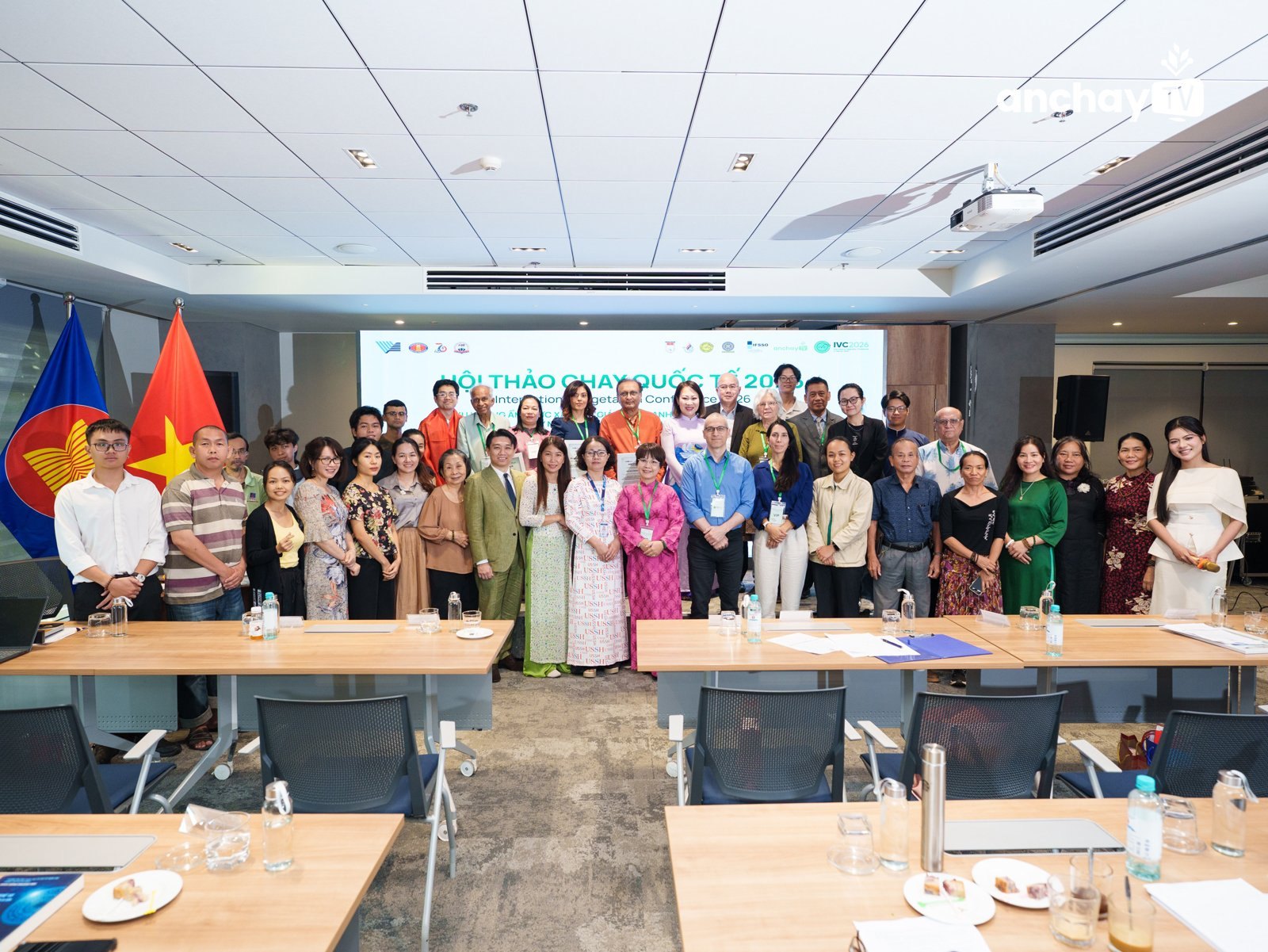
Between sessions, the organisers invited speakers on stage to receive certificates and mementoes. The participating businesses received framed thank-you letters signed on behalf of the organisers by Mr Lê Vinh Thao (IVU representative) and Assoc. Prof. Dr Phan Thị Hồng Xuân (President of the Vietnam – Southeast Asia Friendship Association in Ho Chi Minh City).
Partners and the second day at HCMUSSH
The conference was supported by green businesses from the GBM Network and Chay Việt Nam: LDT Joint Stock Company, PU AURA scented candles, Diệp Trường Phát, Cờ Thủy Tinh Châu (Thiết Kiến Tạo), Xuân Nguyên Group, Fujiwa Vietnam, Mit Vegan Foods, Thế Giới Chay, Thiện Thành, MixMatch, msSlim macrobiotic meals, VH AL Corp – Dr.D’s Formula, An Tâm Sơn Group, and Mr Nguyễn Tiến Tuyến, founder of Chay Việt Nam. Each of them and their displays appear in the separate article on the sponsors and the green market.
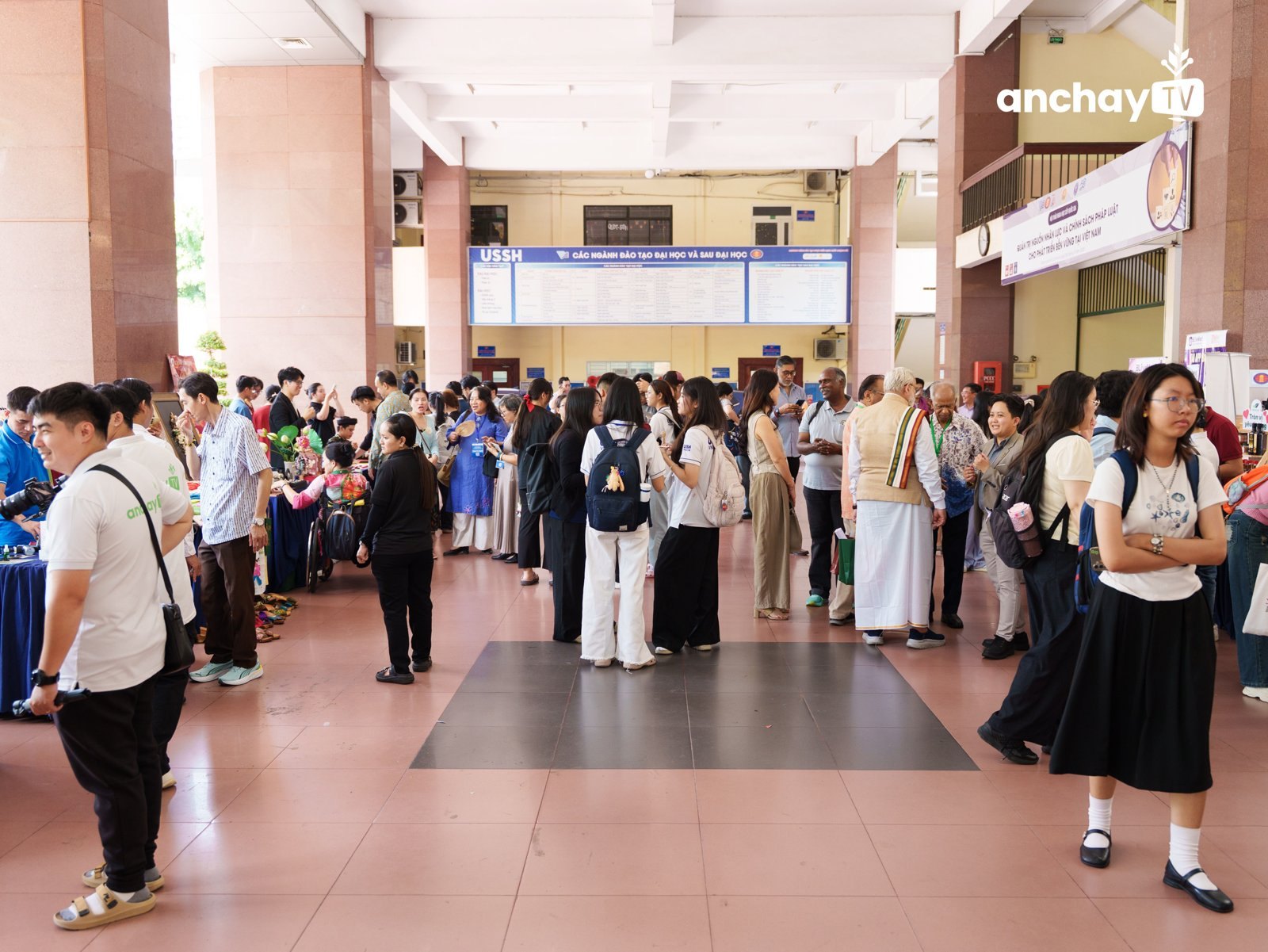
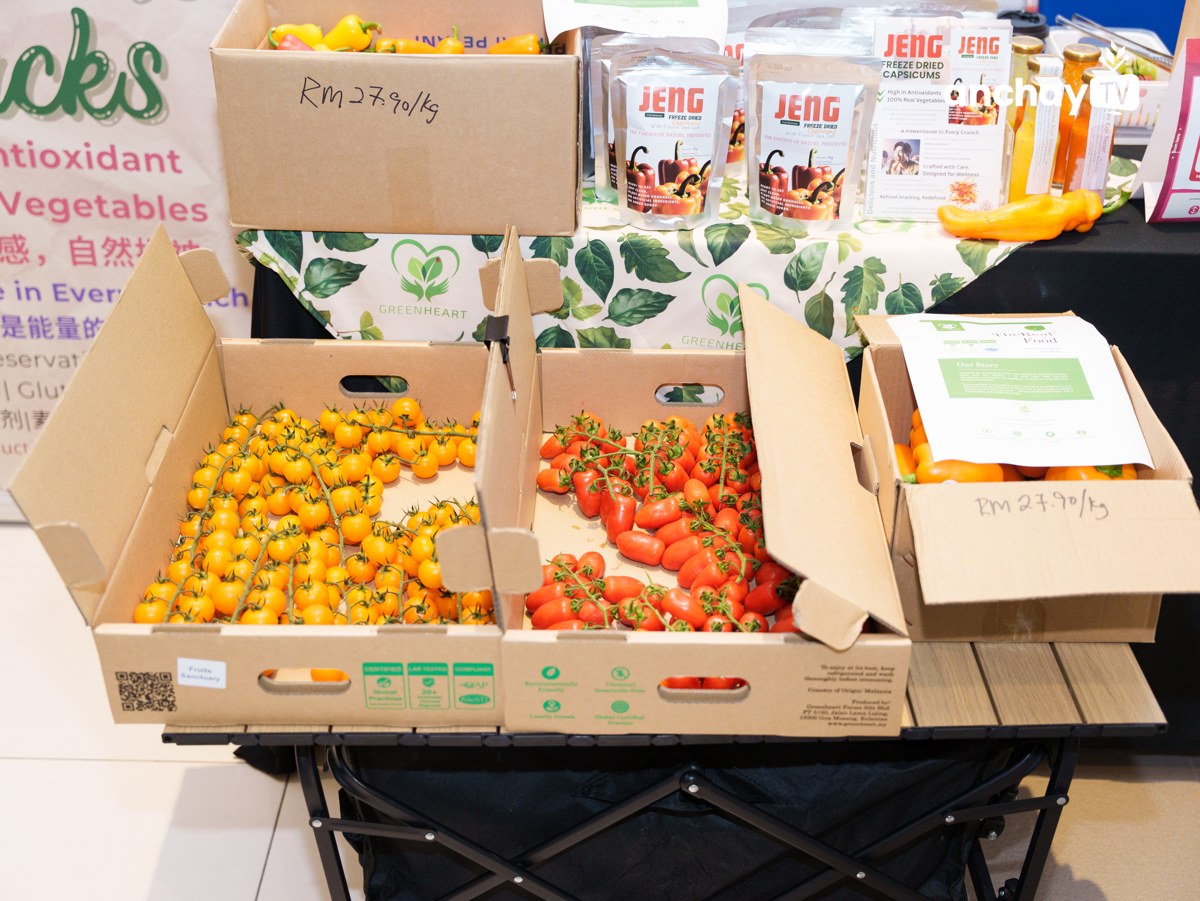
On 6 November the programme “Vegetarian food culture exchange – experience and business networking for sustainable development” continued in Hall D at the University of Social Sciences and Humanities, with an exhibition of vegetarian food, drinks, farm produce and health products: read about the second day at HCMUSSH.
Sources: ivc2026.com · the HCMUSSH article of 9 November 2026 · gbm.network · the IVC 2026 master slide deck · the organisers’ discussion script.